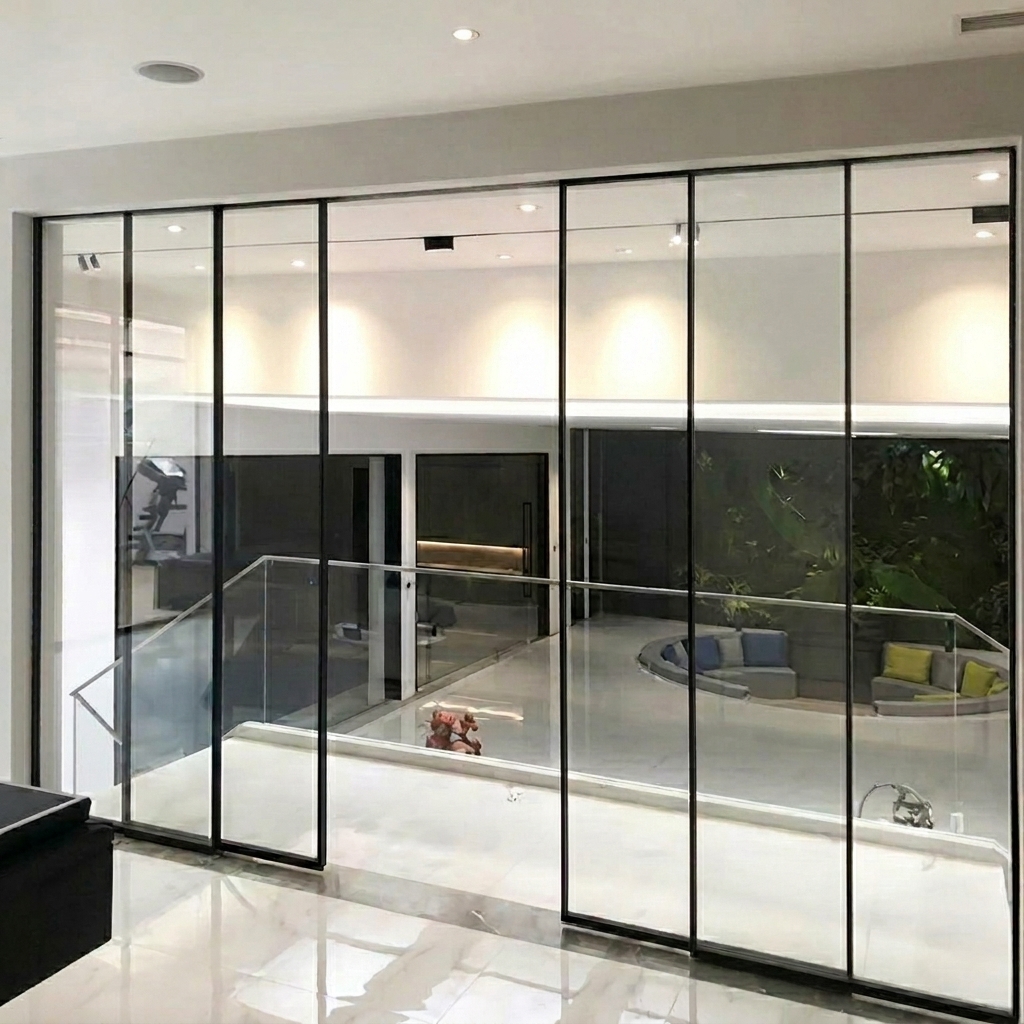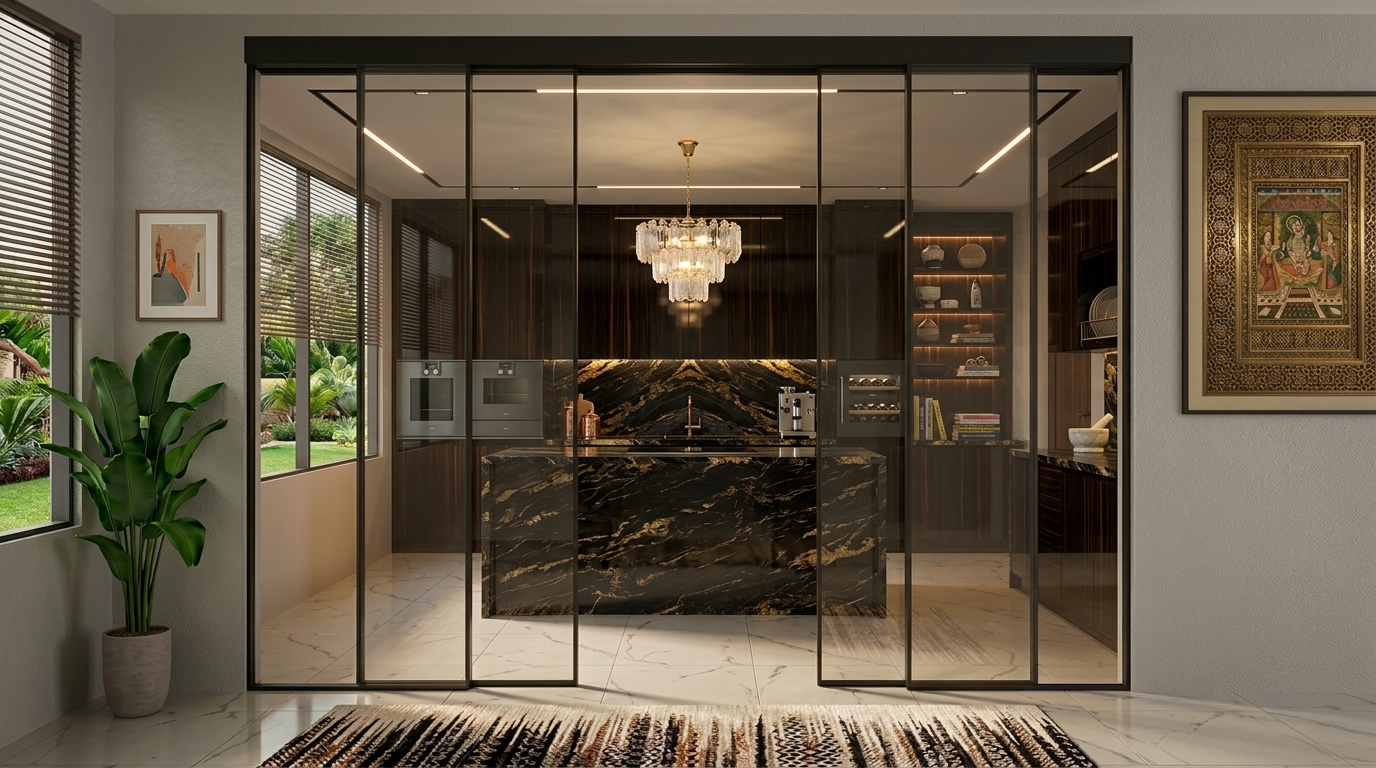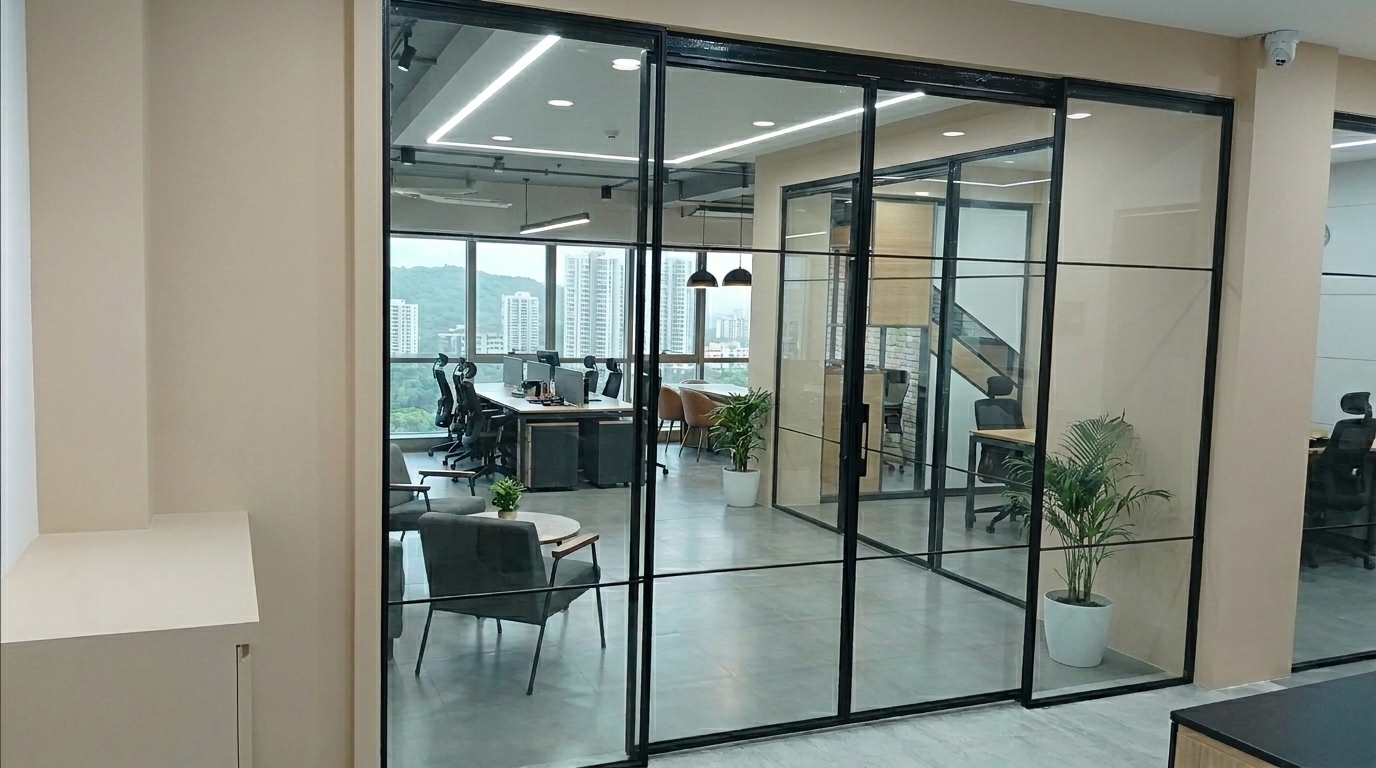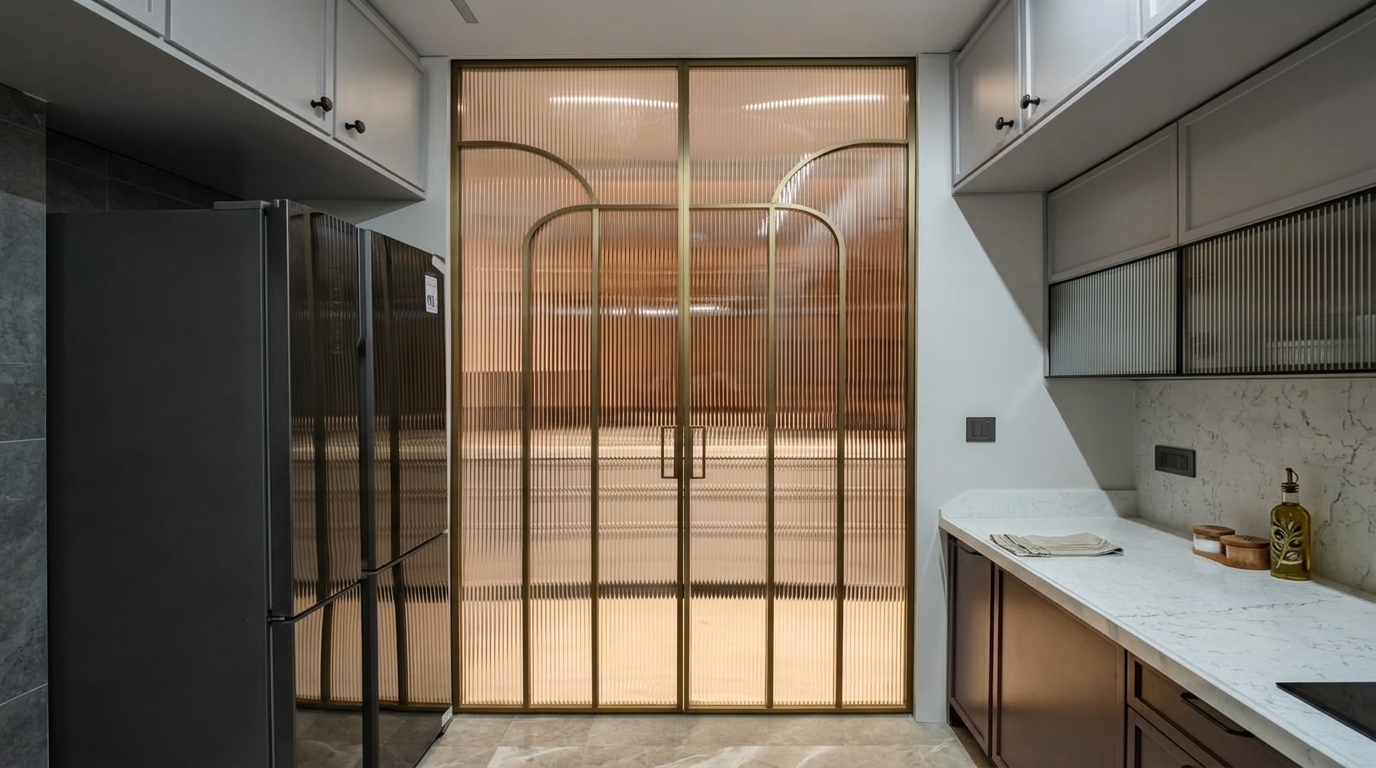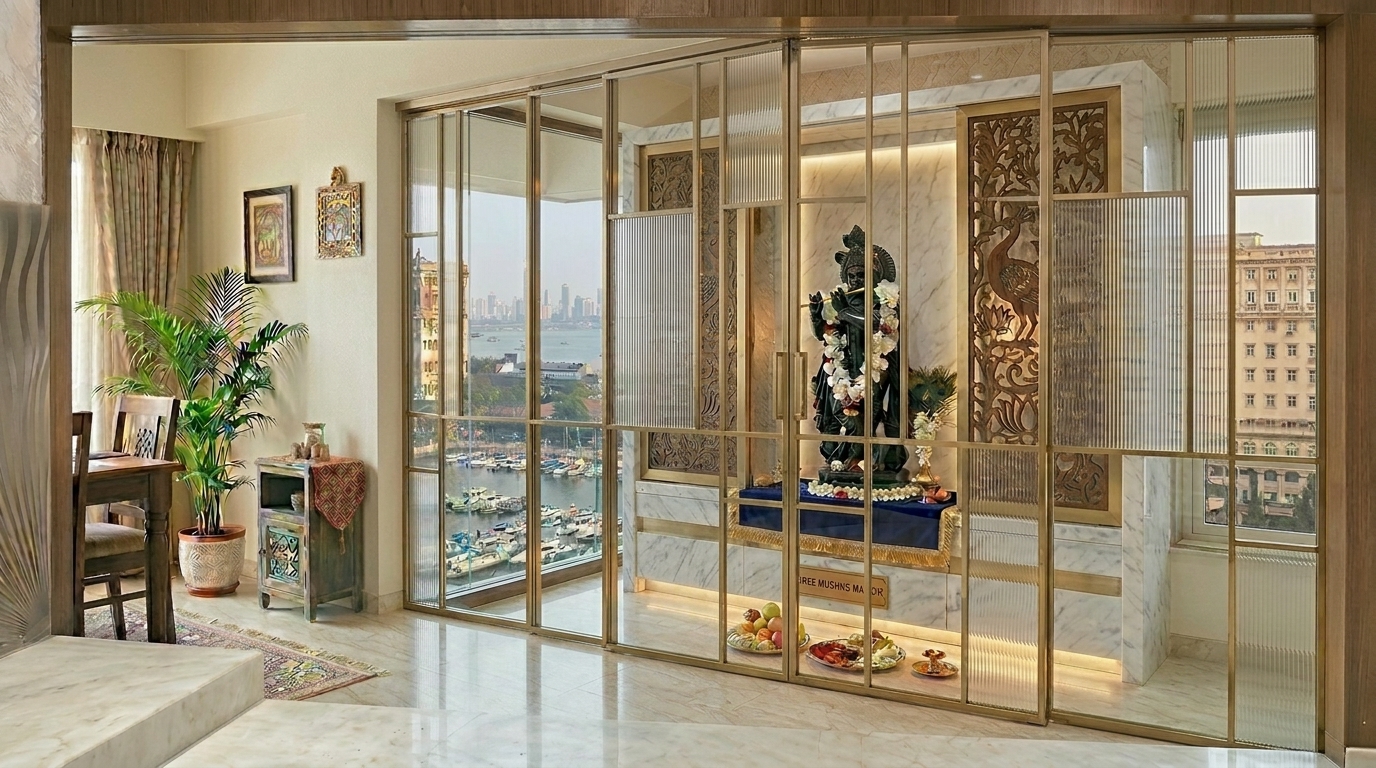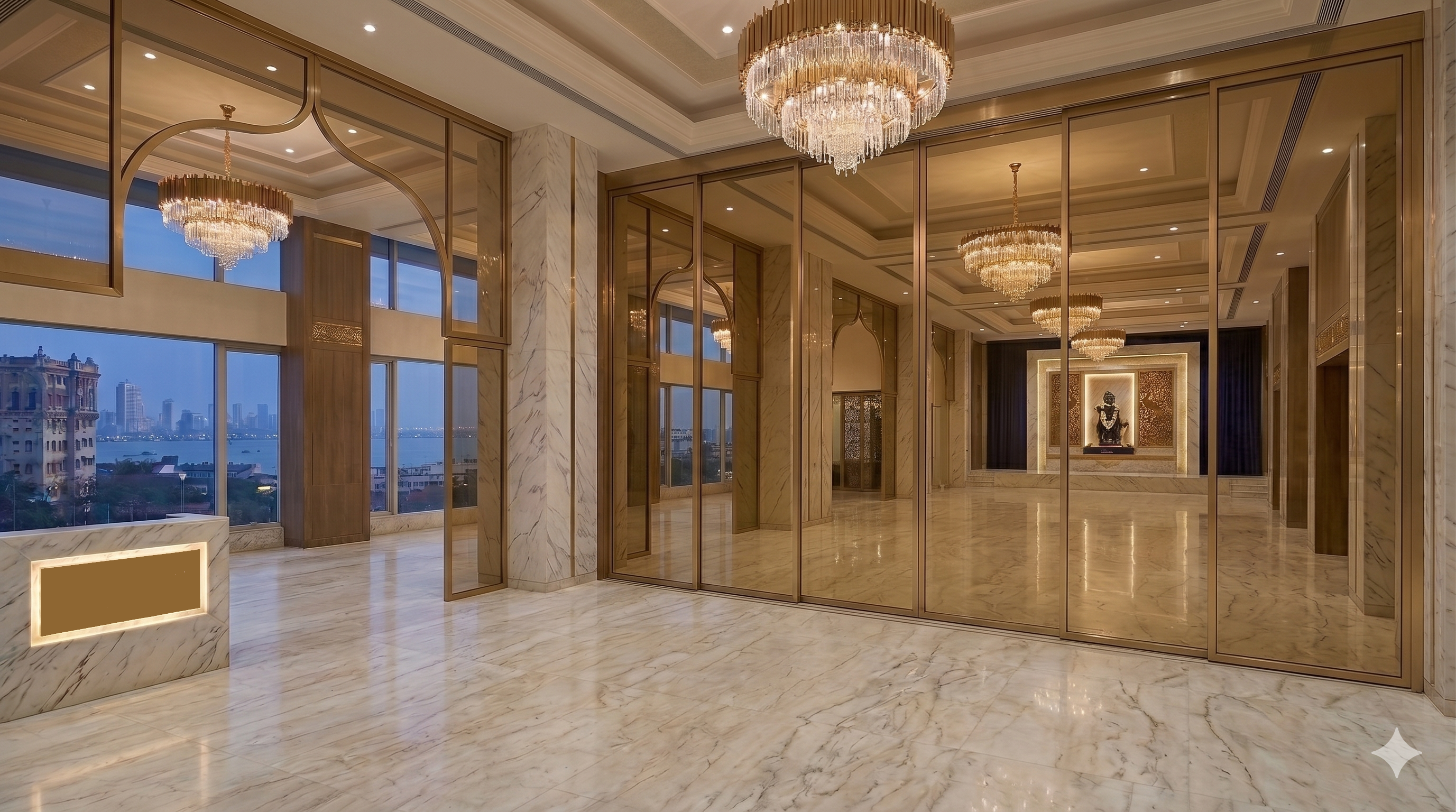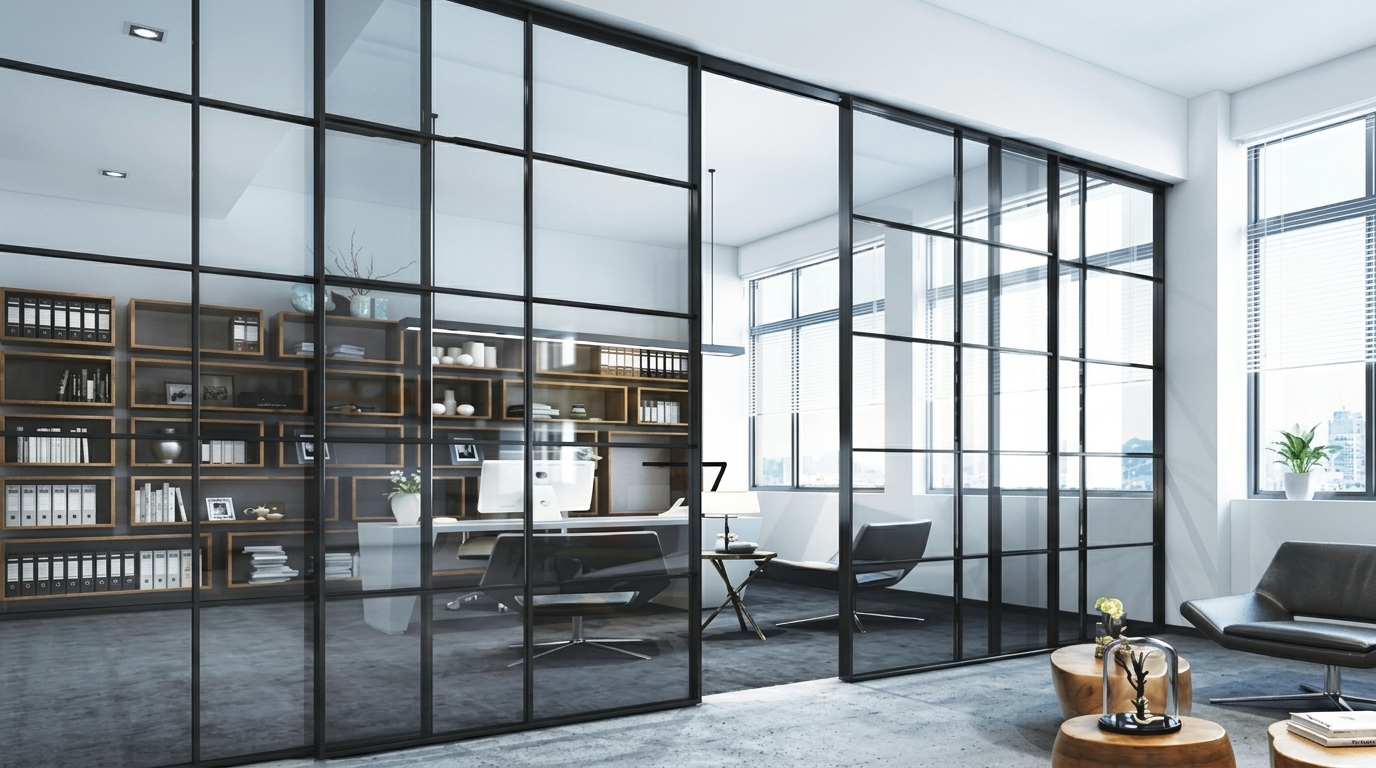
Slim-section sliding glass door opening to a Mumbai balcony
Service Profile · (2+2) / (1+1) Synchronous Sliding Door

Pull one panel. The other meets it.

A 16 × 45 mm slim-section sliding door system where two panels move together to a centre meeting line — pull one and the matching panel slides synchronously the same distance the other way. (1+1) for two panels, (2+2) for four. Built for living rooms that open onto Mumbai balconies.

Section
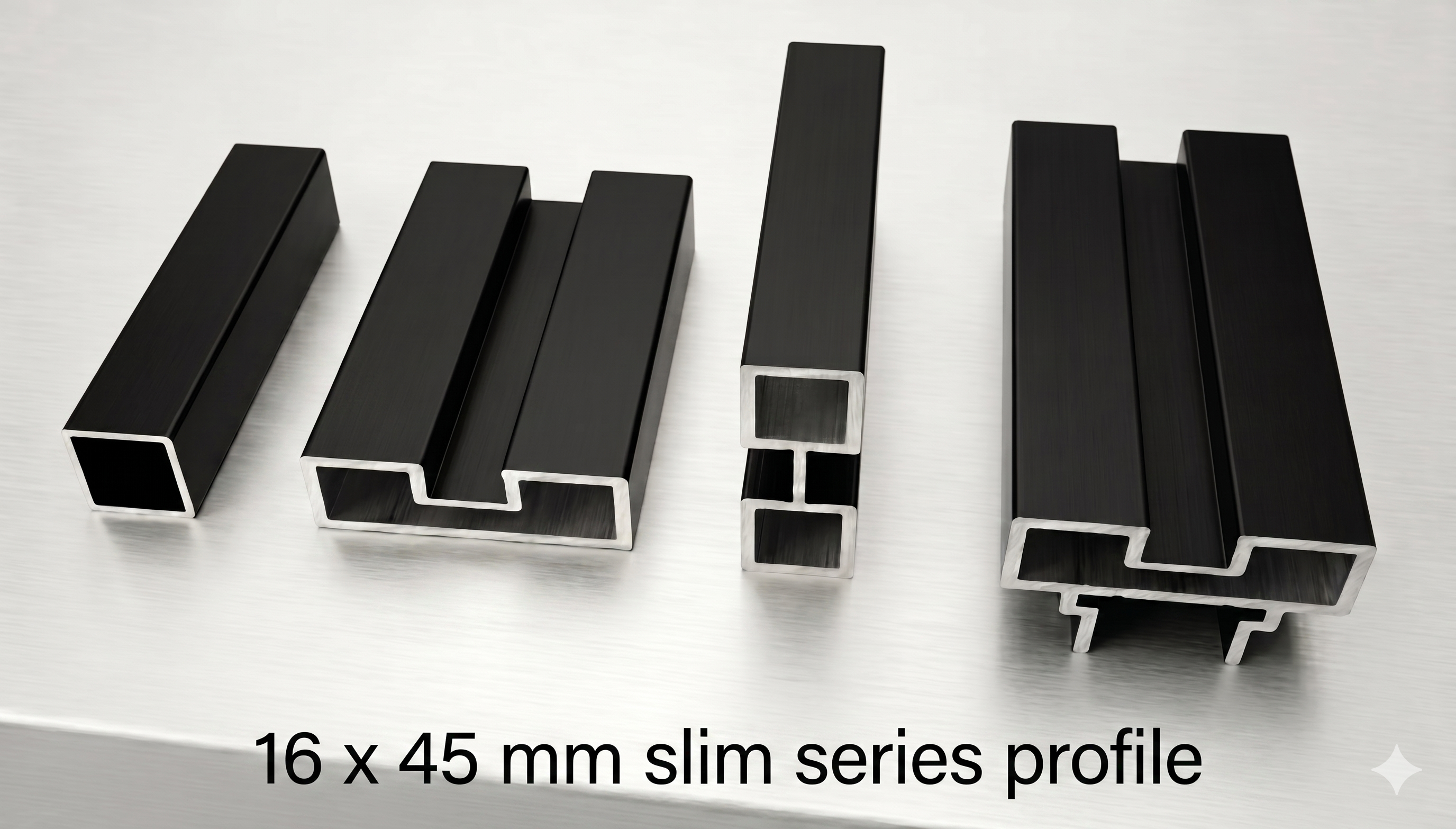
16 × 45 mm
Glazing
6 / 8 / 12 mm
Panel span
Up to 3 m
Rollers
SS 304
Tracks
4 or 5
Frame life
15+ years
Scroll
Chapter 01 · The Problem

Three sliders that
never quite sat right.

A typical Bandra living room — twenty-foot opening to the balcony, a sea-facing view, a designer who has spent six months on the elevation. The sliding door is the largest single line in the room. Three of the standard answers compromise it before the room is even finished.

The centre meeting line stops looking accidental and starts reading as a design decision.
i.

The 27 × 65 domal slider

Solid and well-priced — but the section is heavy on the elevation, the panels stack to one side, and the drawing the designer signed off no longer reads the same.

ii.

The French door

Beautiful in a townhouse. Wrong on a Mumbai apartment balcony — it eats floor space the room cannot spare, and the centre meeting hinge is an obstacle.

iii.

Fixed glass + a single slider

Cheaper, but the opening is asymmetric and the access panel is always the smaller half. The room never feels balanced.

iv.

The fourth answer

A 16 × 45 slim slider with a synchronous belt — pull one panel, the other meets it at the centre. The elevation reads symmetrical even when the door is open.

Chapter 02 · How it works

Two panels.
One belt. One pull.

01

A slim 16 × 45 frame

Top and bottom track machined to a 0.3 mm tolerance. Section runs continuously across the opening — no exposed splice, no jointed mullion at the centre.

02

A synchronous coupling belt

Hidden in the head track. Locks the two panels into a 1:1 motion ratio — pull the right-hand panel 600 mm and the left-hand panel slides 600 mm the other way at exactly the same speed.

03

A magnetic centre interlock

When the panels meet, a neodymium catch closes them flush — no light gap, no whistle in monsoon wind. SS 304 rollers ride on the bottom track; the belt carries no panel weight.

No misaligned stack.
No second pull.
No centre mullion in the way.

The mechanism the designer drew is the mechanism the homeowner uses every morning. Suraj reads the elevation before the shop drawing leaves the workshop.

Slim sliding door interior detail
Centre meeting · Synchronous belt
Chapter 03 · Material

What it’s made of.
Down to the interlock.

A 16 × 45 mm slim section is unforgiving — every part has to carry its load on a smaller cross-section. Specified for Mumbai’s monsoon and AC season, fabricated in our Santacruz workshop, every fastener stainless.

Slim aluminium frame profile detail
Material 01

The section — 6063-T6 at 16 × 45 mm.

Architectural aluminium drawn to a 16 × 45 mm slim profile — roughly half the visual weight of a standard 27 × 65 domal. Anodised silver, champagne, black, or powder-coat to any RAL or NCS swatch.

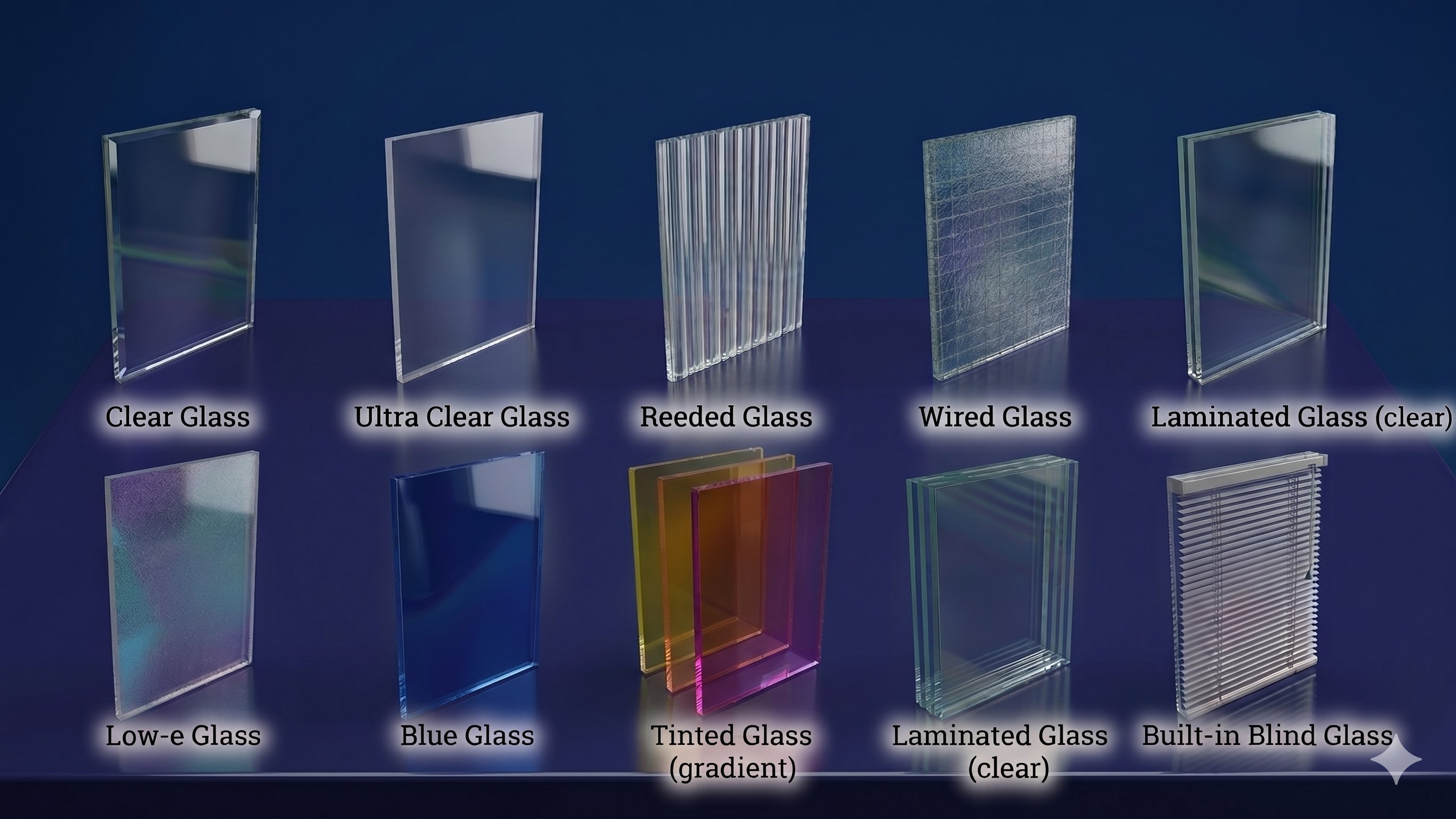
Toughened glass panel close-up
Material 02

The glass — toughened 8 or 12 mm.

8 mm toughened as standard. 12 mm where panel spans cross 2.5 m or for sea-facing openings. Double-glazed unit (DGU) optional on AC-heavy rooms — adds 4–6 dB sound insulation and meaningful thermal cut.

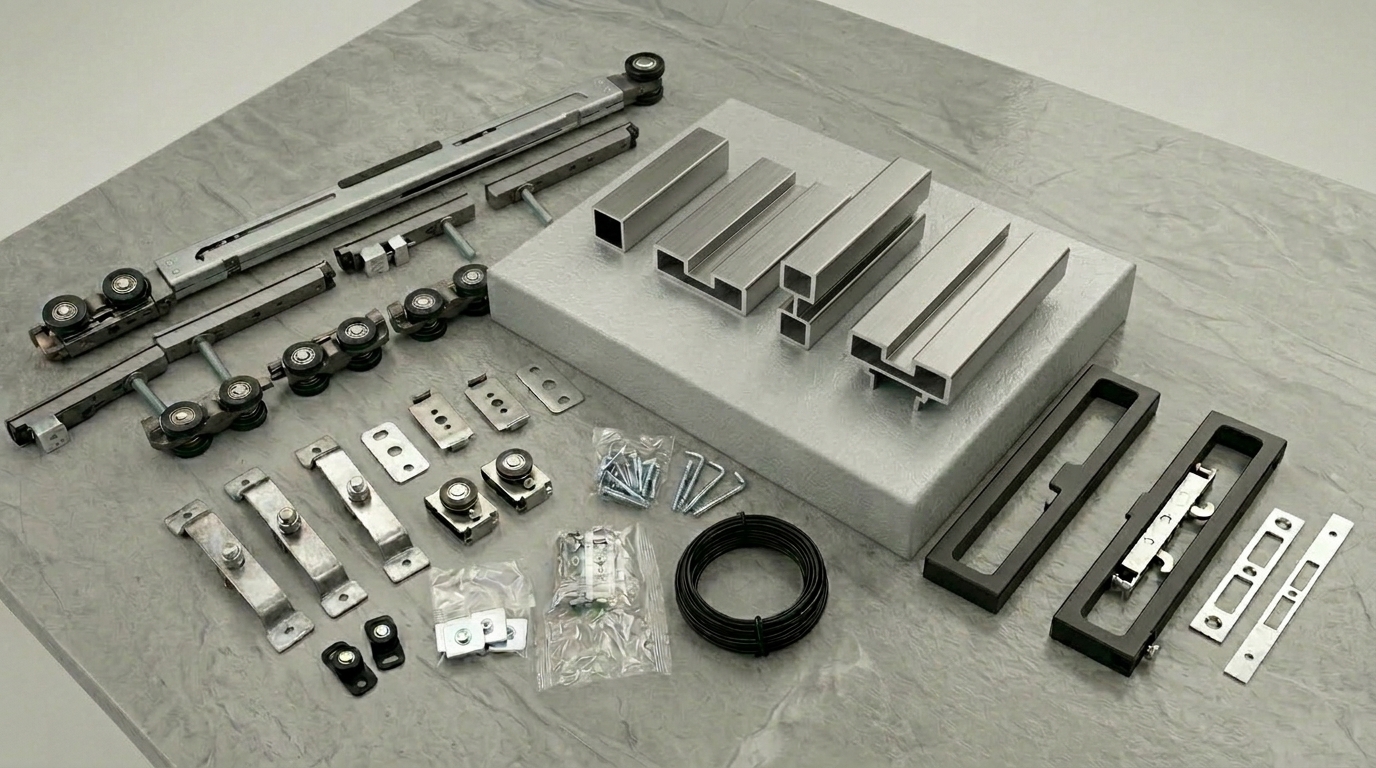
Stainless steel hardware tag close-up
Material 03

The hardware — all stainless.

SS 304 ball-bearing rollers, sealed against humidity. Synchronous belt is reinforced and serviceable from the head track. Magnetic centre interlock is neodymium. Every fastener stainless — no MS bolt that can rust onto a freshly painted reveal.

Chapter 04 · Where it’s installed

Real rooms.
Real elevations. Real light.

Living rooms onto balconies in Bandra, Juhu and Worli. Master bedrooms onto private balconies. Dining rooms onto terraces. Podium-level garden doors and pool-deck openings in Khar and Powai villas. Anywhere a slim section, a centre meeting line and a clean sightline matter.

Living room with sliding door to a balcony
Living room → Balcony · Bandra

The most common install.

A 3.6 m opening from the living room onto a sea-facing balcony. (1+1) for two panels, (2+2) where the run is wider. The centre meeting line falls on the natural axis of the room.

Master bedroom with balcony slider
Master bedroom · Worli

Private balcony slider

Dining area with sliding glass doors
Dining → Terrace · Juhu

(2+2) on a wider run

Open living and dining with garden door
Podium garden · Khar

Villa ground-floor opening

Lounge with sliding doors opening outward
Lounge → Pool deck · Powai

12 mm glass for the wind load

Quiet bedroom with sliding glass
Bedroom · Lower Parel

DGU for AC-season insulation

Mumbai sea-facing skyline at dusk
South Mumbai · Sea-facing

Marine-grade gasket and SS 316 hardware within 1 km of the coastline

Chapter 05 · Comparison

A direct read on the
seven decisions that matter.

Standard 27 × 65 domal slider
French door / fixed glass + single slider
Aditi 16 × 45 Synchronous Slider
Visual section size
27 × 65 mm — heavy line
50–80 mm hinged frame / mixed run
16 × 45 mm — half the line weight
Centre meeting
Asymmetric stack to one side
Hinge in the middle / fixed jamb
Symmetrical — both panels meet at centre
Operation
Two separate pulls
Pull each leaf or open one side
Single pull — synchronous belt does the rest
Floor space lost
Zero
0.5–1.0 m for door swing
Zero — sliding panels
Roller life in monsoon
Plastic rollers fail in 3–5 yr
SS 304 ball-bearing — sealed
Centre interlock
Loose at meeting stile
Hinge gap, weatherstrip dependent
Magnetic — flush close, no whistle
Mosquito-net rebate
Surface-fixed afterthought
Awkward retrofit
Integrated cassette rebate from drawing stage
Chapter 06 · Benefits

Rarely a single feature.
Always the combination.

A slim 16 × 45 sightline.

Roughly half the visual line weight of a standard 27 × 65 domal slider. The view through the glass is what the designer drew, not a row of frame.

Synchronous belt, balanced load.

Pull one panel and the matching panel meets it at the centre at the same speed. No second pull, no asymmetric stack — and the belt carries no panel weight, so the rollers do not wear faster.

A centre meeting line that reads as design.

The two panels close flush at the middle of the opening on a magnetic neodymium interlock. No light gap. No whistle in monsoon wind. The line is intentional.

Built for 15+ years in Mumbai weather.

SS 304 ball-bearing rollers are sealed against humidity. The 6063-T6 frame anodises hard. EPDM gasket keeps water out. Sea-facing flats get SS 316 fittings on the same drawing.

Designer-spec finishes.

Anodised silver, champagne, black or bronze. Powder coat to any RAL or NCS swatch to match the existing window system or the joinery palette of the room.

Available in 1+1 or 2+2 configurations.

(1+1) for openings up to 3 m. (2+2) with two pairs of synchronous panels for runs up to 6 m. Both detail to the same 16 × 45 sightline; only the track count changes.

A motorised option, if the brief asks.

Concealed 24 V drive in the head track with a hand-held remote. Useful on sea-facing openings where the panels are heavy with 12 mm glass, or where the homeowner wants single-button access.

Integrated mosquito-net rebate.

The frame is drawn from day one with a 25 mm rebate for our retractable mosquito-net cassette. No surface-fixed afterthought; the screen disappears into the side of the frame.

Designer-direct.

Suraj reads the drawing. He measures the opening himself, signs off the shop drawing before fabrication, and walks the site at handover. No franchise, no rep.

Chapter 07 · Common questions

The questions a designer
asks before the quote.

Up to 3 m clear opening with two panels at 1.5 m each. Beyond that we move to the (2+2) — four panels in two synchronous pairs, up to 6 m total run. The 16 × 45 section stays the same; only the track count changes from four to five.
Yes — for panel spans up to 2.5 m wide. Beyond that we either step the section to 18 × 50, switch to a 5-track configuration, or recommend the (2+2) with shorter panels. We size the section against the glass weight and the wind load on the elevation, not the other way round.
Yes. EPDM gasket on every meeting edge, magnetic centre interlock with no light gap, drained head and sill track. The bottom track has weep holes that drain the rebate to the outside — water that hits the door cannot pool against the gasket.
Yes — and we recommend specifying the rebate on the original drawing. The frame leaves a 25 mm side cassette space for our retractable net so the mesh disappears into the frame when not needed. Retrofitting later is possible but the cassette becomes surface-mounted.
An annual visual check from the head track. The belt is reinforced and rated for 100,000+ cycles — at four pulls a day, that is well over fifty years. If a belt ever does need replacement, we open the head track from above without dismantling the panels.
4–6 weeks for a (1+1) on a 3 m opening, drawing approval to install. (2+2) installs add 1–2 weeks for the second pair of synchronous panels. Add a week for sea-facing flats — the SS 316 hardware order is longer.
We do not publish per-foot pricing — a 2 m balcony slider in 8 mm glass costs differently from a 4 m sea-facing (2+2) in 12 mm DGU with motorised drive. Send the drawing or the opening dimensions and we'll quote within two working days.
Send the drawing

Send the drawing.
We’ll quote by Friday.

No site-visit fee. No call-centre. No quote written before measurement. Suraj reads the drawing himself, walks the site within 48 hours of enquiry, and signs off the shop drawing before fabrication starts.

If the slider sits on a balcony with a child or pet at home, ask about pairing the door with an Invisible Grill and a retractable mosquito net on the same frame — three systems, one fabricator, one shop drawing.

Workshop
Santacruz (East), Mumbai
aditi enterprise · Aluminium fabricators for Mumbai's interior designers, architects and HNI residences.
© 2026 · All rights reserved