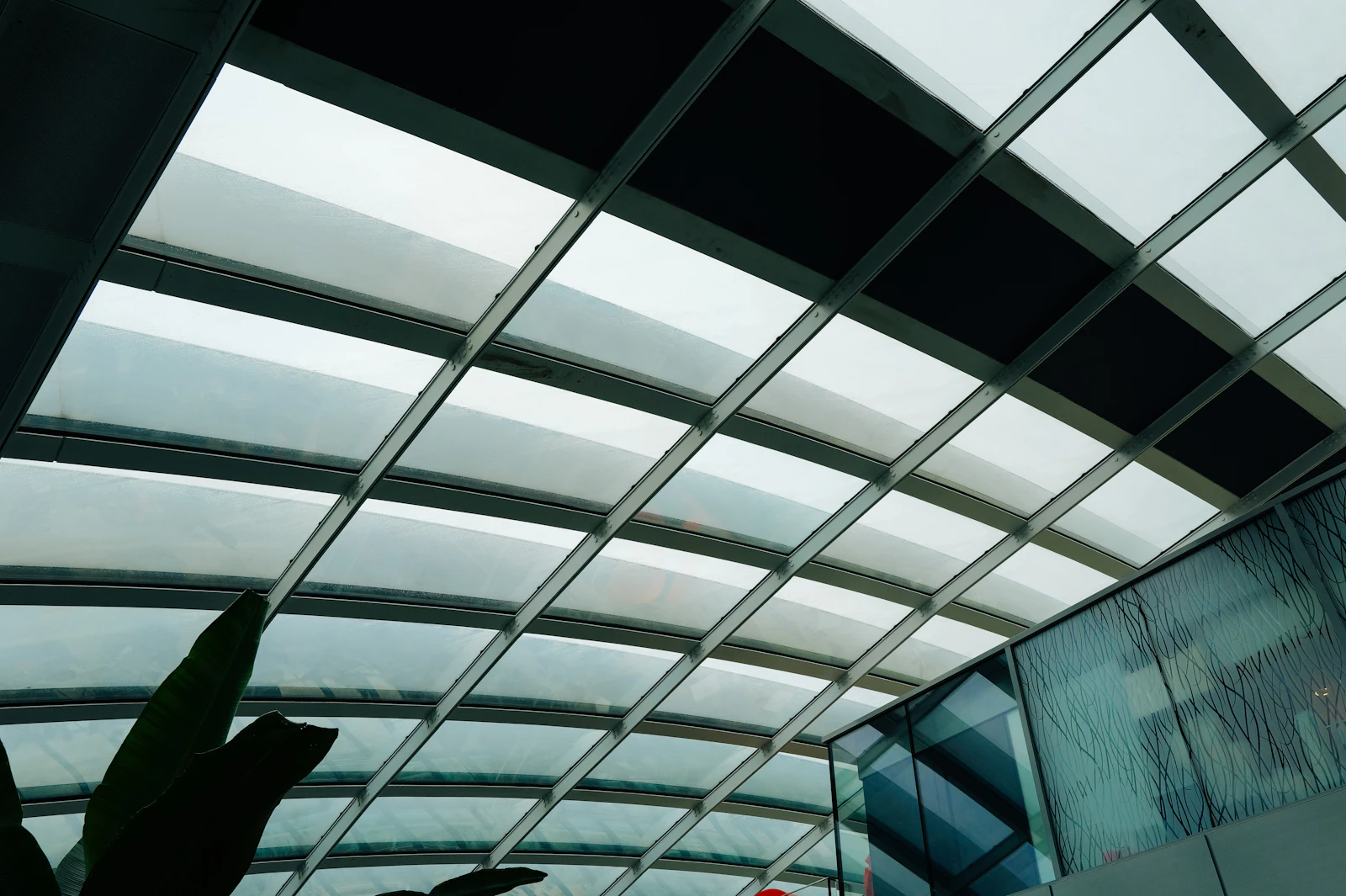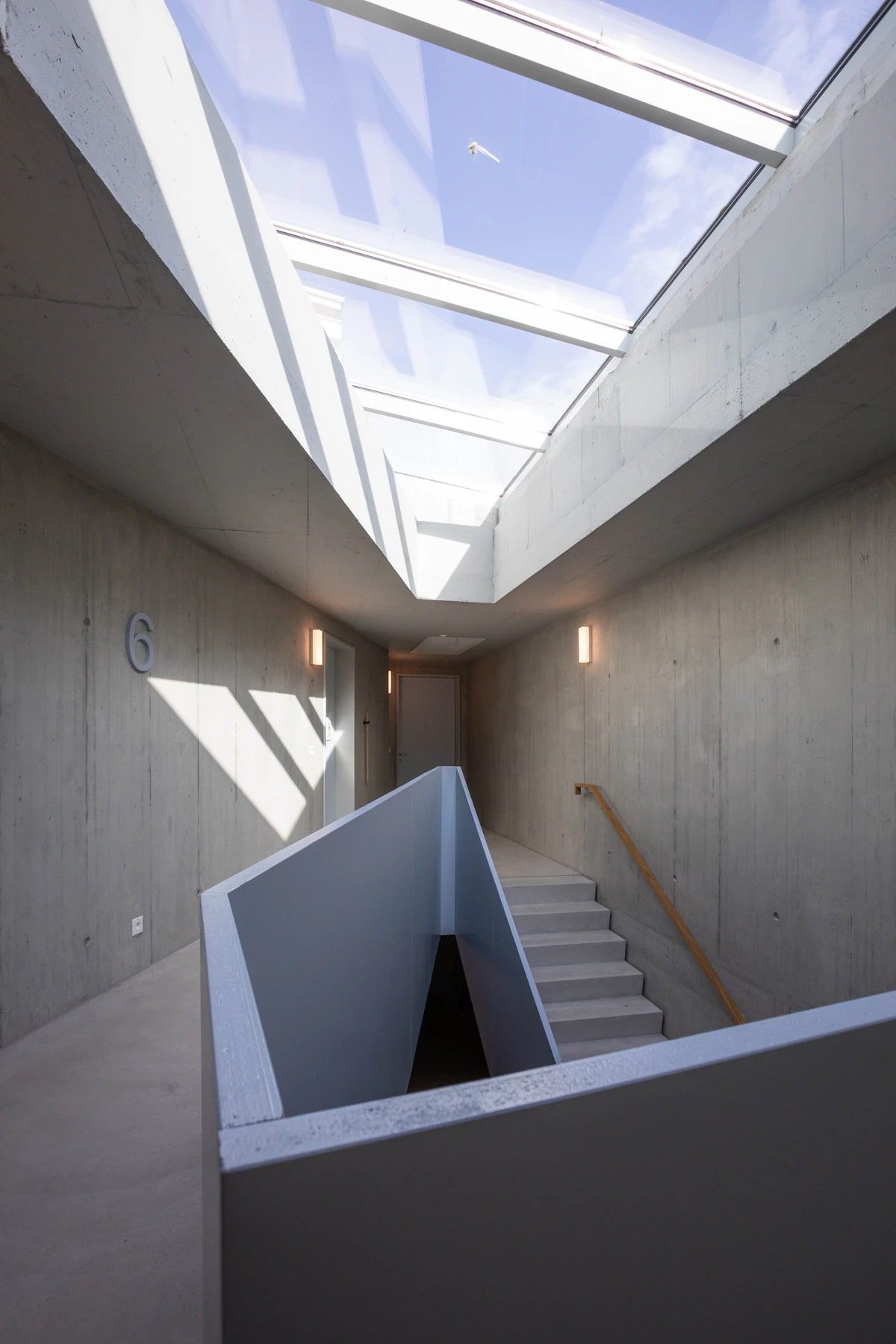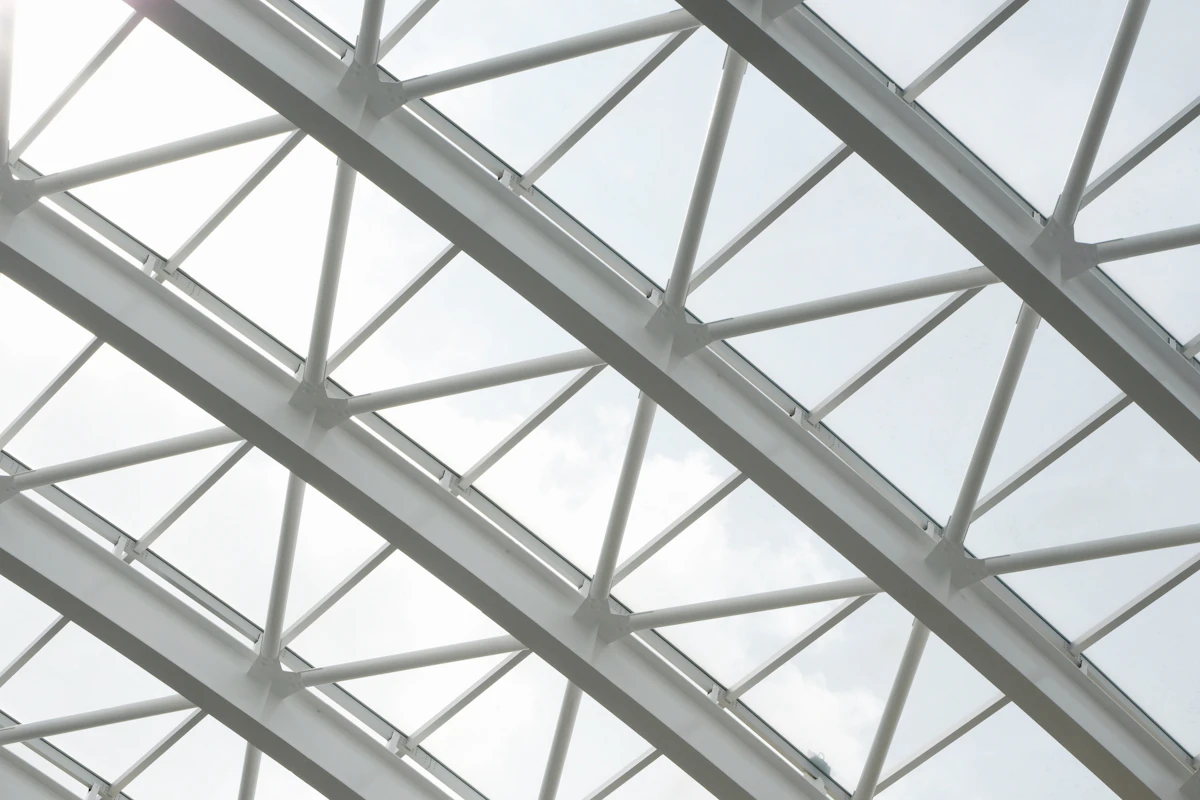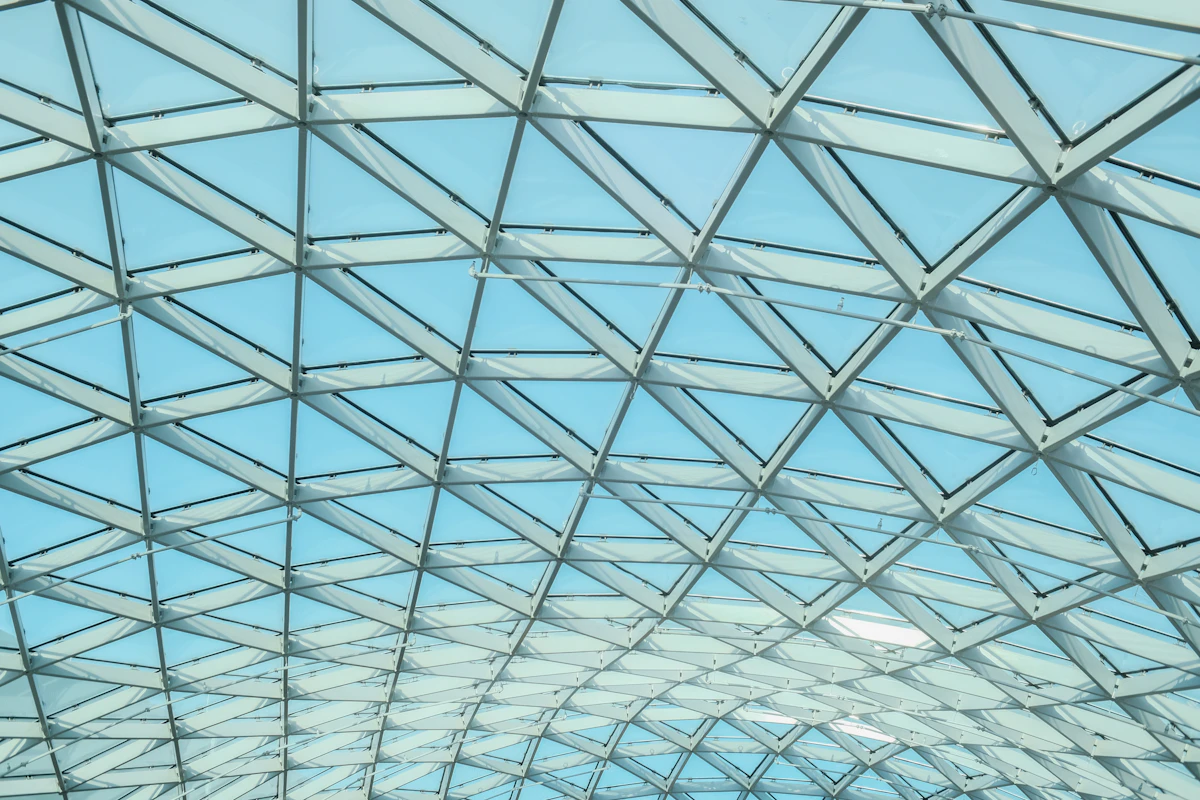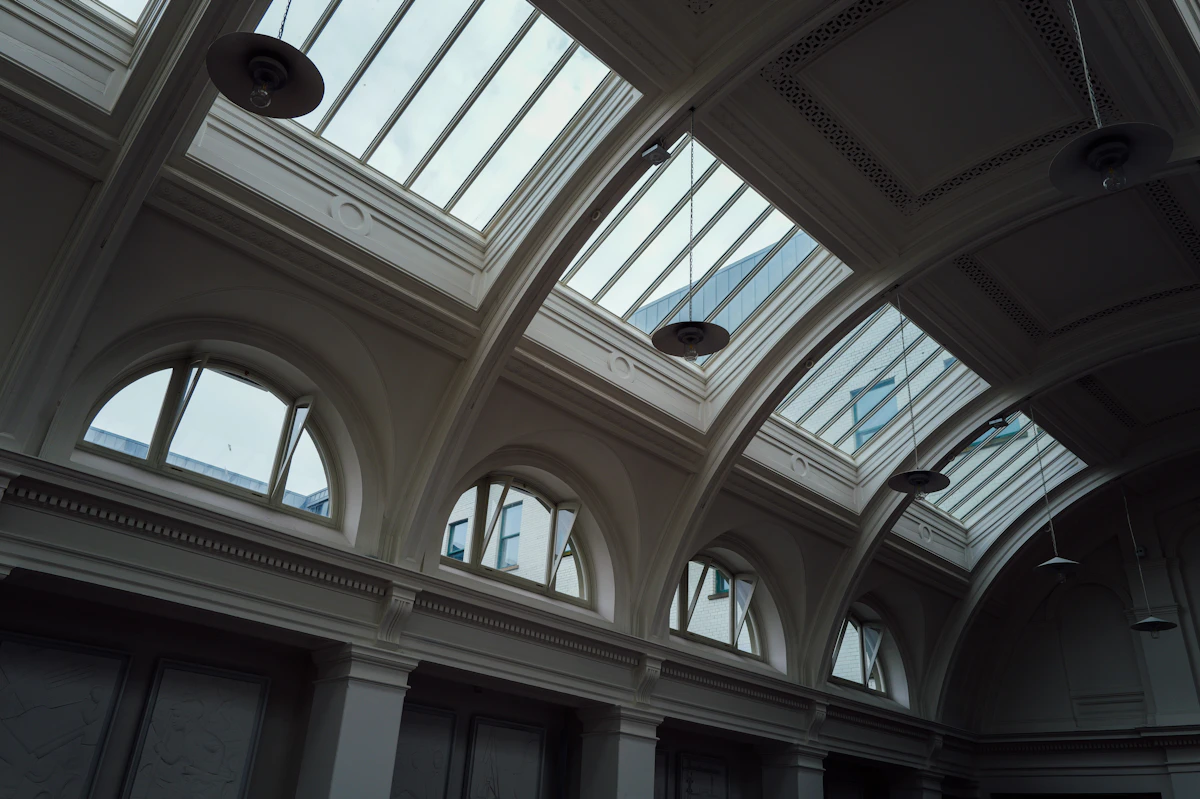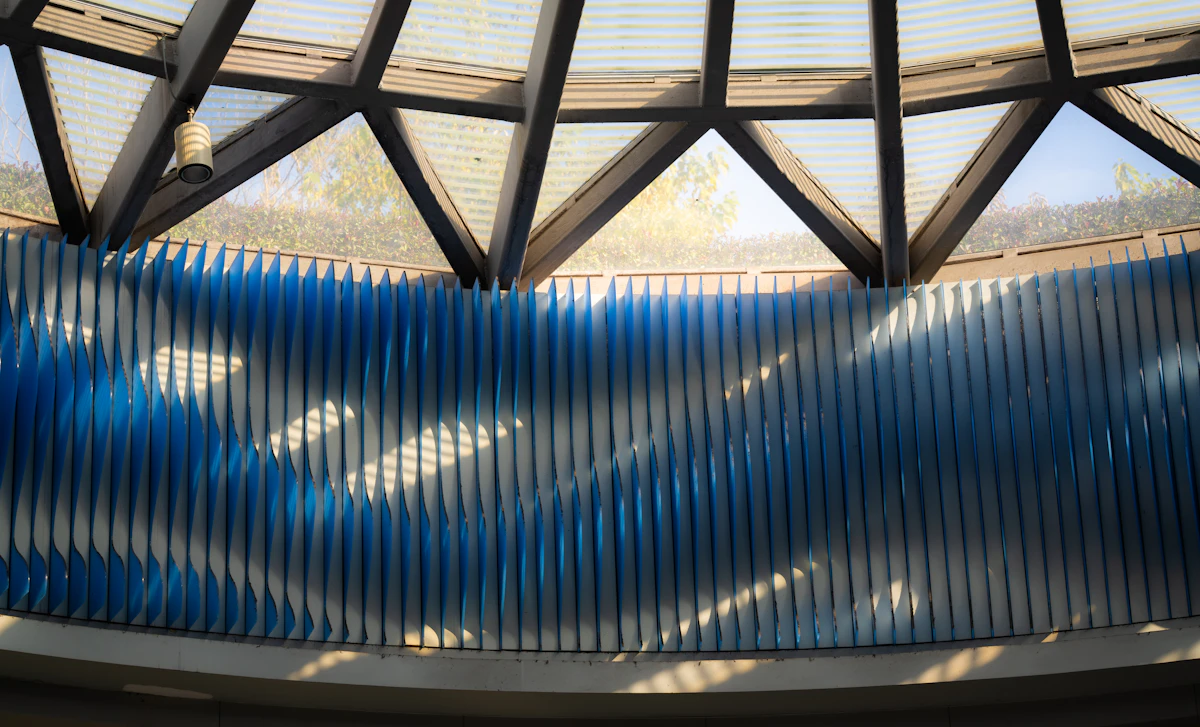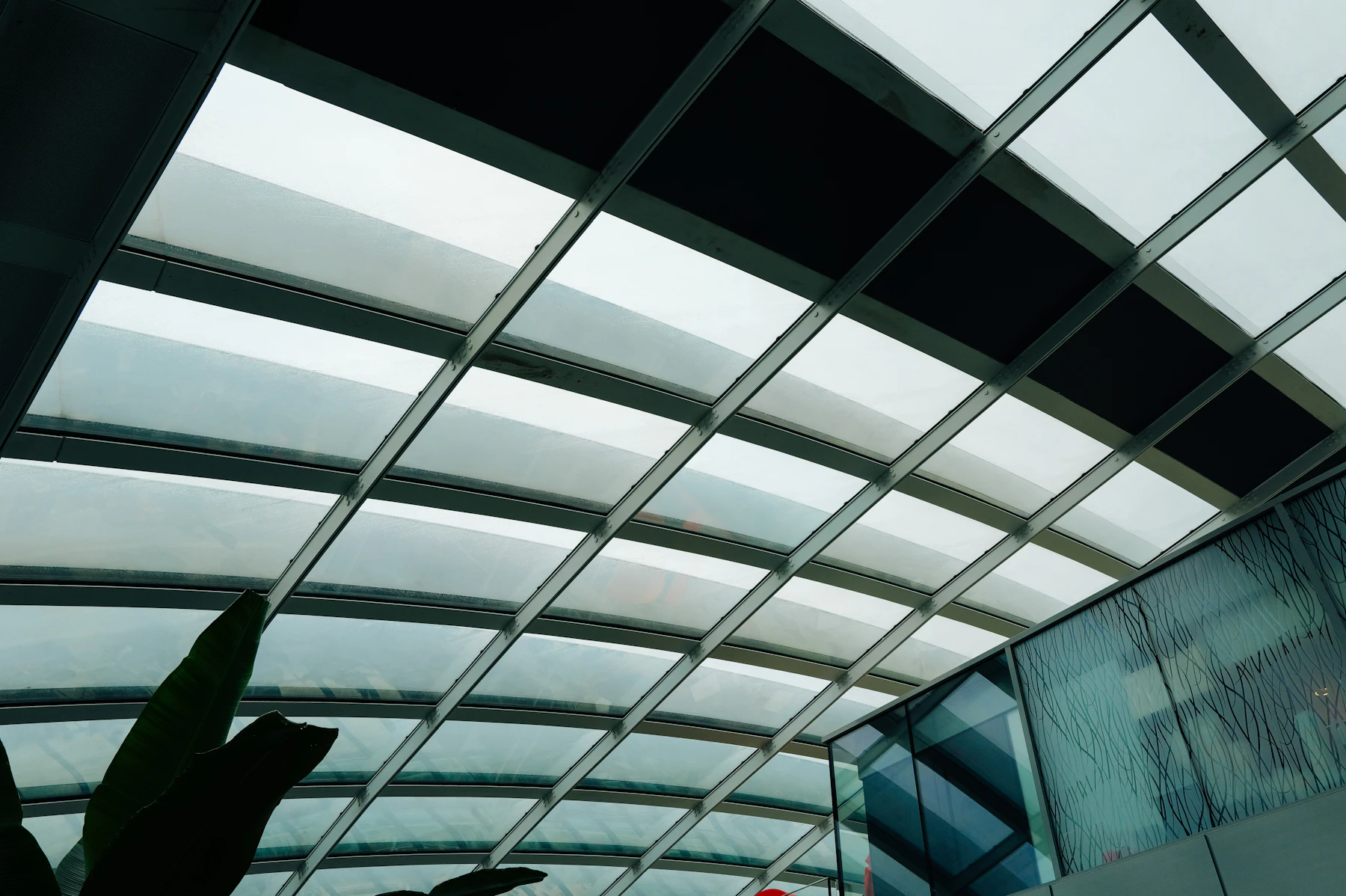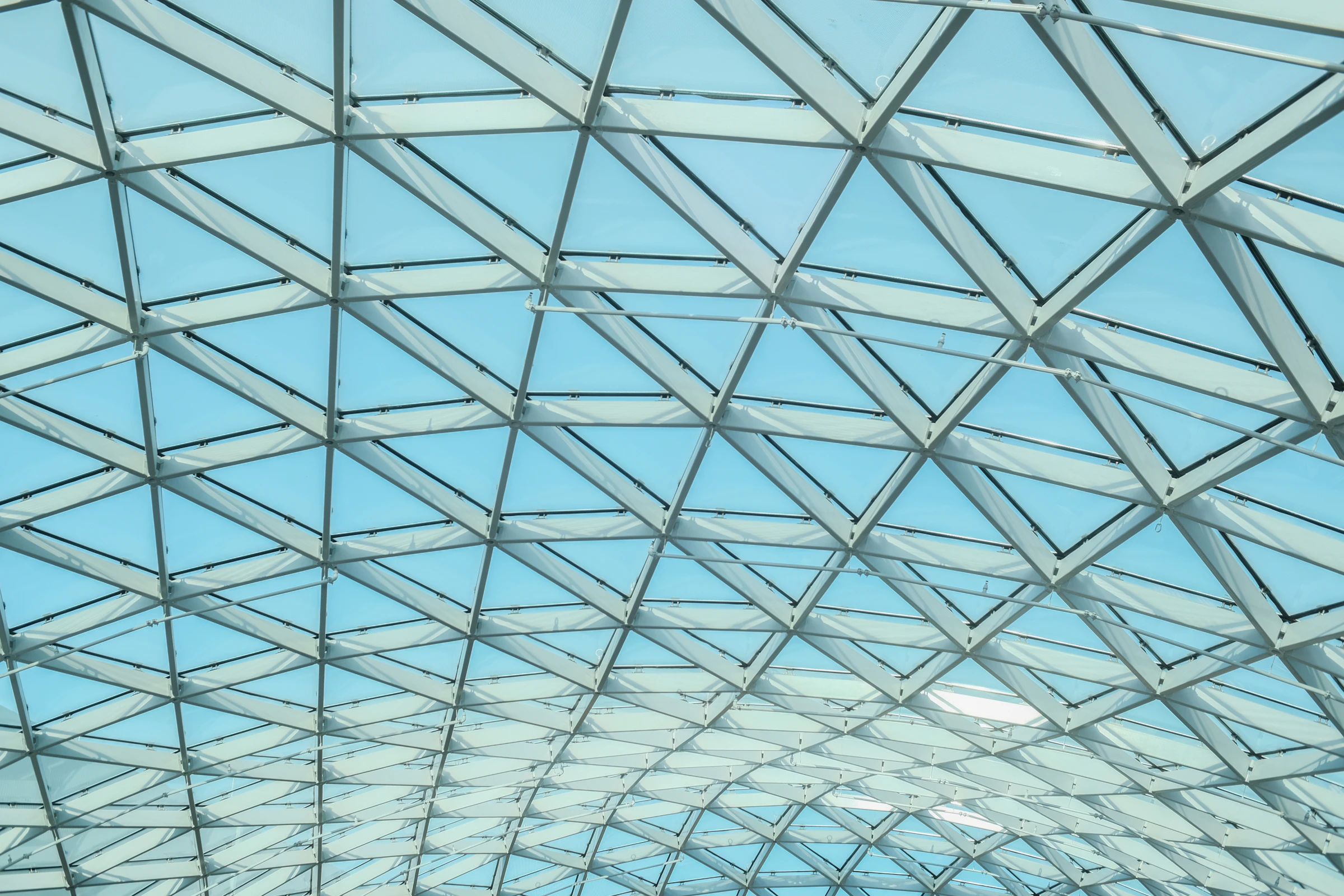
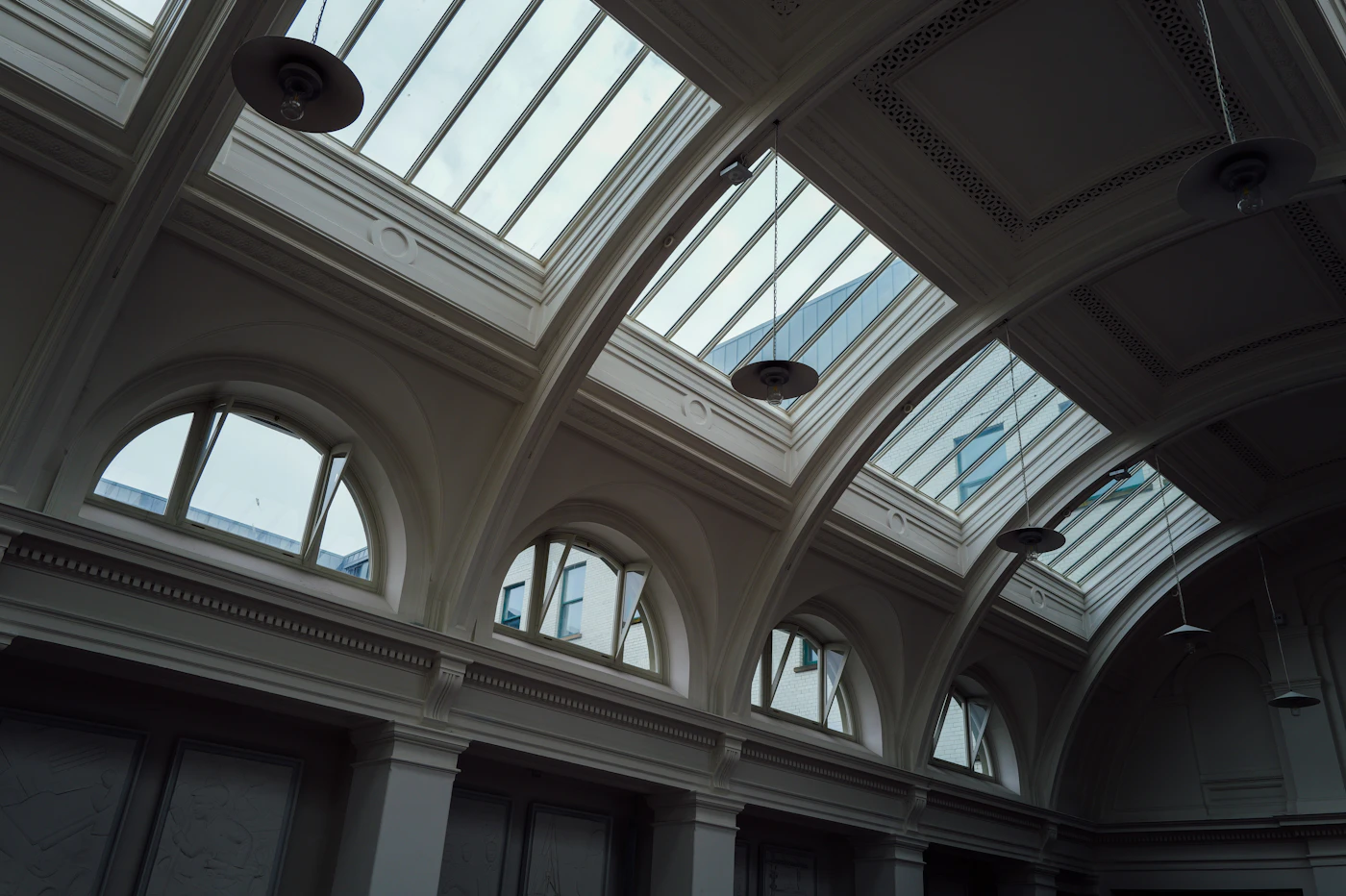
Architectural glass and aluminium skylight from below
Service Profile · Skylight System

Daylight overhead. Dry, even in August.

A glass-and-aluminium skylight detailed for the Mumbai monsoon. Thermal-break aluminium rafters, laminated double-glazed units, double-seal gasket system and integrated drainage — pyramid, ridge or mono-pitch — for atriums, central staircases, lobbies and restaurant courtyards.

Frame
Alu 6063-T6
Glass
DGU 24 mm lam
Geometry
Pyramid / ridge / pitch
Bay
Up to 4 × 6 m
Fixings
SS 304
Seal
EPDM + silicone
Scroll
Chapter 01 · The Problem

Three skylights.
Three monsoons. All leaked.

Older South Mumbai bungalow atriums leak in monsoon — the lead flashing fails, the puttied glass cracks, the water enters at the ridge. New bungalow plans want a skylight over the central staircase, but the builder spec leaks within two seasons. Restaurants want a daylit courtyard ceiling and remain reluctant after one monsoon failure. The brief is daylight overhead. The brief is also: dry, in August.

A skylight is not a roof feature. It is a roof — held to the same monsoon spec.
i.

The acrylic dome

Cheap, available, yellows in three years. Delaminates at the kerb in monsoon. Looks improvised on a bungalow that cost everything else to build.

ii.

FRP sheet

A stop-gap. Translucent rather than transparent, ages badly under Mumbai sun, and stains in the joint where the sealant fails. Specified by builders, regretted by owners.

iii.

Or simply leave it open with a chajja

And the floor below stays wet for four months a year. The atrium becomes a courtyard, then a problem, then a tarpaulin job by the time the family moves in.

iv.

The fourth answer

A thermal-break aluminium frame, 24 mm laminated DGU, EPDM-and-silicone double-seal, integrated condensation drain. Built once, drained correctly, dry from year one.

Chapter 02 · How it works

Four parts.
One sealed plane.

01

A thermal-break aluminium frame

6063-T6 rafters and ridge, with a polyamide thermal break separating the outer and inner profiles. Stops the heat bridge that fogs glass and stops the AC loss that designers find on the energy audit. Pyramid, ridge or mono-pitch geometries.

02

Laminated double-glazed units

DGU 24 mm — laminated 5+5 mm outer, 12 mm air gap, laminated 5+5 mm inner. Safety glass to both faces, UV block, and sound attenuation against monsoon rainfall. Solar-control coating on the outer face on request.

03

A double-seal gasket system

Primary EPDM gasket on the rafter face, secondary silicone weatherseal at the cap. Two independent seals, two independent failure paths — water has to defeat both before it reaches the inside.

Integrated condensation drain.
Sloped ridge to eaves.
Aluminium flashing to the kerb.

Mumbai humidity condenses on the inner face. The condensation drain is a continuous channel inside the rafter — water collects, runs to the eaves, exits through the kerb flashing. The detail nobody else publishes; the detail that decides whether the skylight ages well.

Skylight rafter and glass detail with cap
Rafter detail · EPDM + silicone double-seal
Chapter 03 · Material

What it’s made of.
Down to the gasket.

Specified for a Mumbai monsoon and the salt air that follows. Same alloy family as our slim-section windows. Glass to safety spec. Every fastener stainless. Designed to be retrofitted onto an existing kerb without lifting the slab.

Thermal break aluminium frame profile
Material 01

The frame — thermal-break aluminium.

6063-T6 rafters and ridge with a polyamide thermal break between the outer and inner profile. Stops the heat bridge that drives condensation in AC season. Powder-coat or anodise to any RAL.

Laminated double glazing detail close up
Material 02

The glass — laminated DGU.

24 mm DGU — 5+5 mm laminated outer, 12 mm air gap, 5+5 mm laminated inner. Safety on both faces, UV block, sound attenuation against monsoon rain. Solar-control or Low-E coating on the outer face on request — recommended for west-facing atriums.

Stainless steel hardware and gasket detail
Material 03

The seal — EPDM + silicone.

Primary EPDM gasket against the rafter face, secondary silicone weatherseal at the cap. Both replaceable in service. SS 304 fasteners and pressure-cap screws throughout — no MS hardware that will rust into the silicone joint.

Chapter 04 · Where it’s installed

Real atriums.
Real monsoons. Real daylight.

Central staircase of a South Mumbai bungalow. Atrium of a double-height living room. Restaurant courtyard ceiling. Podium-level lobby light-well. Hotel breakfast atrium. Design-studio mezzanine. Anywhere the brief is daylight overhead and the existing roof is the wrong answer.

Bungalow central staircase with pyramid skylight
Bungalow staircase · Walkeshwar

The most requested install.

Pyramid skylight, 3 × 3 m, over the central staircase of a Walkeshwar bungalow. Replaced a leaking 1980s acrylic dome on the same kerb — slab untouched. Laminated DGU, EPDM-and-silicone double-seal, condensation channel to the rear gutter.

Double-height atrium with overhead glazing
Atrium · Bandra

Double-height living room

Restaurant courtyard with skylight
Restaurant courtyard · Lower Parel

Daylit dining ceiling

Podium lobby light-well skylight
Podium lobby · Worli

Light-well at street level

Hotel atrium with ridge skylight
Hotel breakfast atrium · Juhu

Ridge-spanned daylight

Mezzanine studio with mono-pitch skylight
Studio mezzanine · Khar

Mono-pitch over the workspace

South Mumbai heritage building
South Mumbai · Heritage retrofit

Replacing failed lead-flashing skylights without lifting the slab — same kerb, sealed plane

Chapter 05 · Comparison

A direct read on the
seven decisions that matter.

Acrylic dome
FRP sheet
RCC slab
Aditi Skylight System
Monsoon-tightness
Fails at kerb in 5–7 yr
Sealant fails year 3
Yes — but no daylight
EPDM + silicone, 15+ yr seal
Daylight transmission
Yellows over time
Translucent, not transparent
Zero
DGU clear or solar-coated
Safety overhead
Brittle, can shatter
Brittle in fire
Safe but blocks daylight
Laminated DGU on both faces
Thermal performance
Single-skin heat bridge
Heavy thermal mass
Thermal-break frame + DGU
AC loss in summer
Significant
Significant
Zero
Sealed thermal-break system
Sound under heavy rain
Loud — drum-skin effect
Quiet
Laminated DGU damps the sound
Salt-air durability
Frame rusts at fixings
Sealant blooms with salt
Plaster spalling
6063-T6 + SS 304 throughout
Chapter 06 · Benefits

A skylight is the roof.
Not a feature on the roof.

Monsoon-tight EPDM + silicone double-seal.

Two independent seals, two independent failure paths. Water has to defeat both gaskets before it reaches the inside. Tested against the kind of horizontal rain that arrives over Bandra Bandstand at the end of July.

Laminated DGU is safety glass.

Both faces laminated 5+5 mm. If a coconut falls from a society compound tree onto the skylight, the glass holds. UV block on the inner laminate. Sound attenuation that turns a monsoon downpour from a drum-skin into a soft hush.

Integrated condensation drain.

A continuous channel inside the rafter collects condensation and drains it to the eaves. The detail nobody else publishes — and the reason older skylights stain at the rafter ten years in. We design the channel into the section.

Thermal-break frame stops AC loss.

A polyamide thermal break separates the outer and inner aluminium profile. Stops the heat bridge that fogs glass in monsoon and bleeds AC in summer. The energy audit on a finished home reads cleaner because of it.

Pyramid, ridge or mono-pitch.

Pyramid for a square atrium or central staircase. Ridge for a long rectangular space — restaurant courtyard, breakfast atrium, mezzanine. Mono-pitch for a single-slope opening against an adjacent wall.

Finish to any RAL.

Powder-coat or architectural anodise — silver, champagne, black, or a colour matched to the joinery below. The frame disappears into the design intent rather than announcing itself.

Retrofittable on existing openings.

Same kerb, new skylight. We replace failed lead-flashing skylights and yellowed acrylic domes on existing kerbs without lifting the slab. One-week site work for a typical 3 × 3 m pyramid.

Salt-air durable on coastal sites.

6063-T6 frame, SS 304 fixings, EPDM gasket — none of which decay in salt air. Specified for sea-facing bungalows in Walkeshwar, Bandra and Juhu without sacrificial coating. The frame holds, the seal holds.

Designer-direct.

Suraj reads the section, walks the kerb, signs off the gasket detail before fabrication. No franchise, no call-centre, no rep filtering technical questions. The relationship is the brand.

Chapter 07 · Common questions

The questions a designer
asks before the quote.

Yes, in most cases. We measure the existing kerb and design the new aluminium frame to land on it without lifting the slab. The thermal break, the EPDM gasket, the silicone weatherseal and the laminated DGU are all new — but the civil work below is untouched. One-week site install on a typical 3 × 3 m pyramid.
The double-seal system — EPDM primary, silicone secondary — has been our standard for years on Walkeshwar and Bandra atriums. The integrated condensation channel handles the moisture that the thermal break stops short of removing. We pour-test every install before handover and we walk the site after the first heavy monsoon.
Yes. Both inner and outer panes are laminated — 5+5 mm safety glass. If either pane breaks, the laminate holds the fragments. We also use solar-control or Low-E coating on the outer face for west-facing atriums where the sun load would otherwise drive AC consumption.
Quieter than people expect. The laminated DGU and the air gap together damp the strike noise — not silent, but a soft hush rather than a drum-skin. Acrylic domes amplify the rain; this system absorbs it. Sit beneath one in monsoon and the conversation continues.
No, when the condensation drain is correctly specified — which is the standard detail on every Aditi skylight. Water condensing on the inner face runs into a continuous channel inside the rafter, collects, and drains out at the eaves. The room below stays dry.
Yes. Pyramid, hipped, ridge, mono-pitch and faceted geometries are all in our catalogue. Curved ridges and unusual shapes are a custom fabrication — send the architectural drawing and we will quote the geometry alongside the aluminium and glass spec.
Typically 6–8 weeks from drawing approval to handover. Most of that is glass fabrication time — laminated DGUs are made-to-order. Site install is one week for a typical 3 × 3 m pyramid, plus the pour-test and a return visit after the first heavy rain.
Send the drawing

Send the kerb detail.
We’ll quote by next week.

No site-visit fee. No call-centre. No quote written before measurement. Suraj walks the kerb himself, reads the existing slab, and signs off the gasket and drainage detail before we fabricate.

If the brief is a retrofit on a leaking dome or a failed lead-flashing skylight, send a photo from below and a photo from above — the diagnosis and the quote come back together.

Workshop
Santacruz (East), Mumbai
aditi enterprise · Aluminium fabricators for Mumbai's interior designers, architects and HNI residences.
© 2026 · All rights reserved