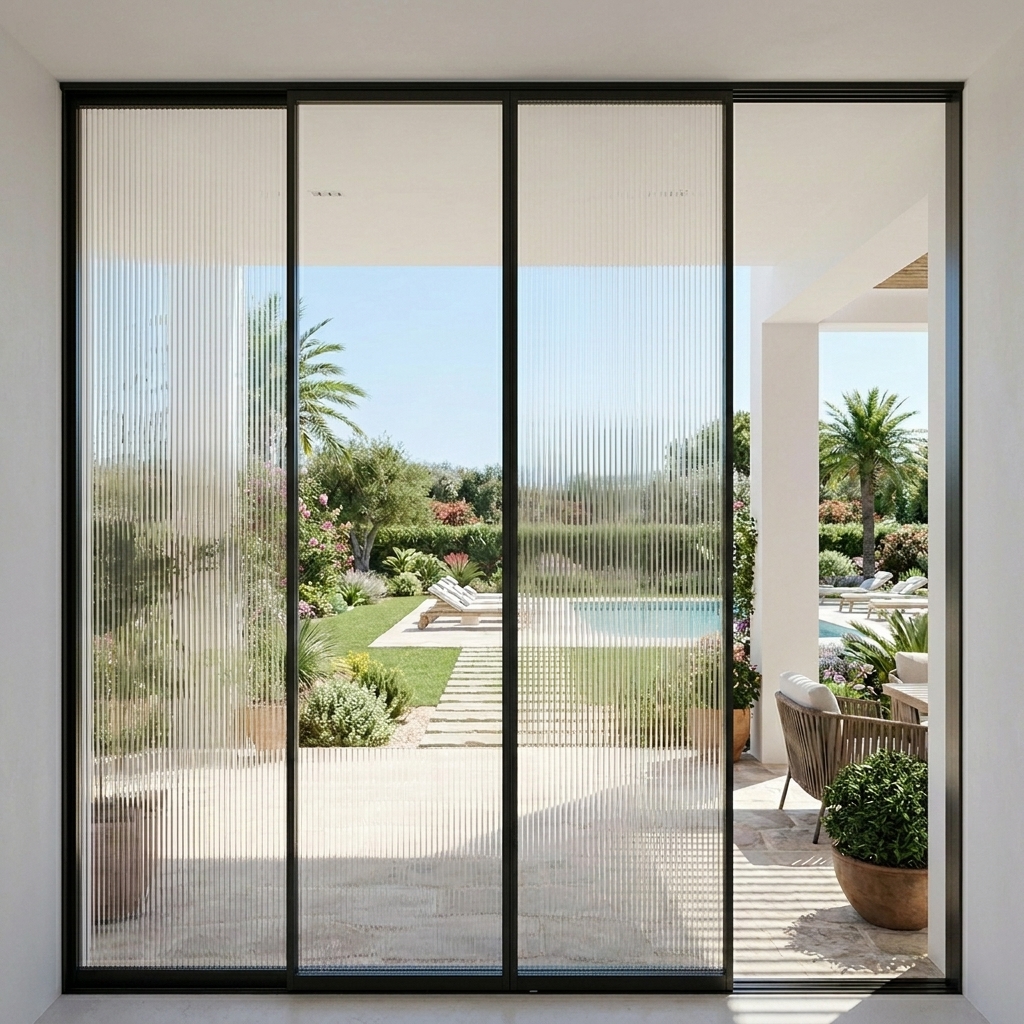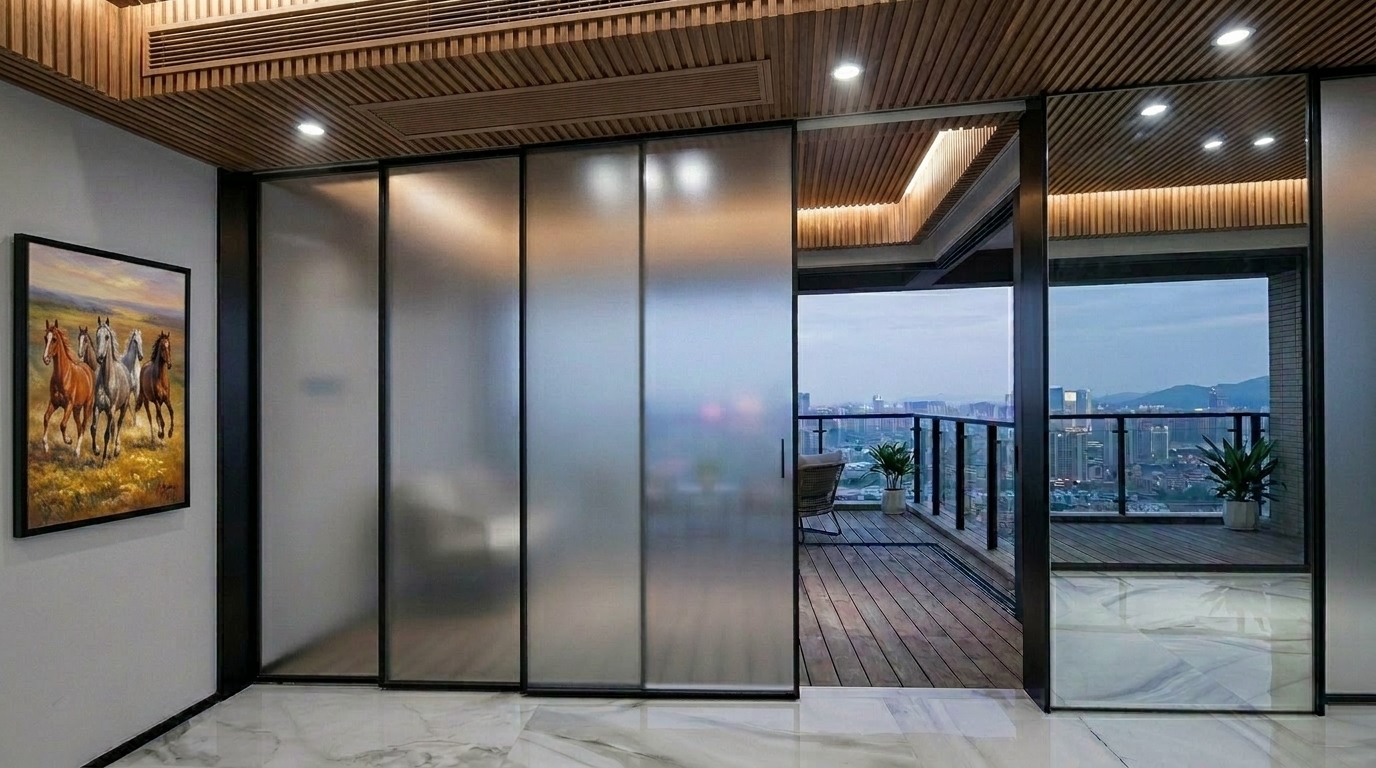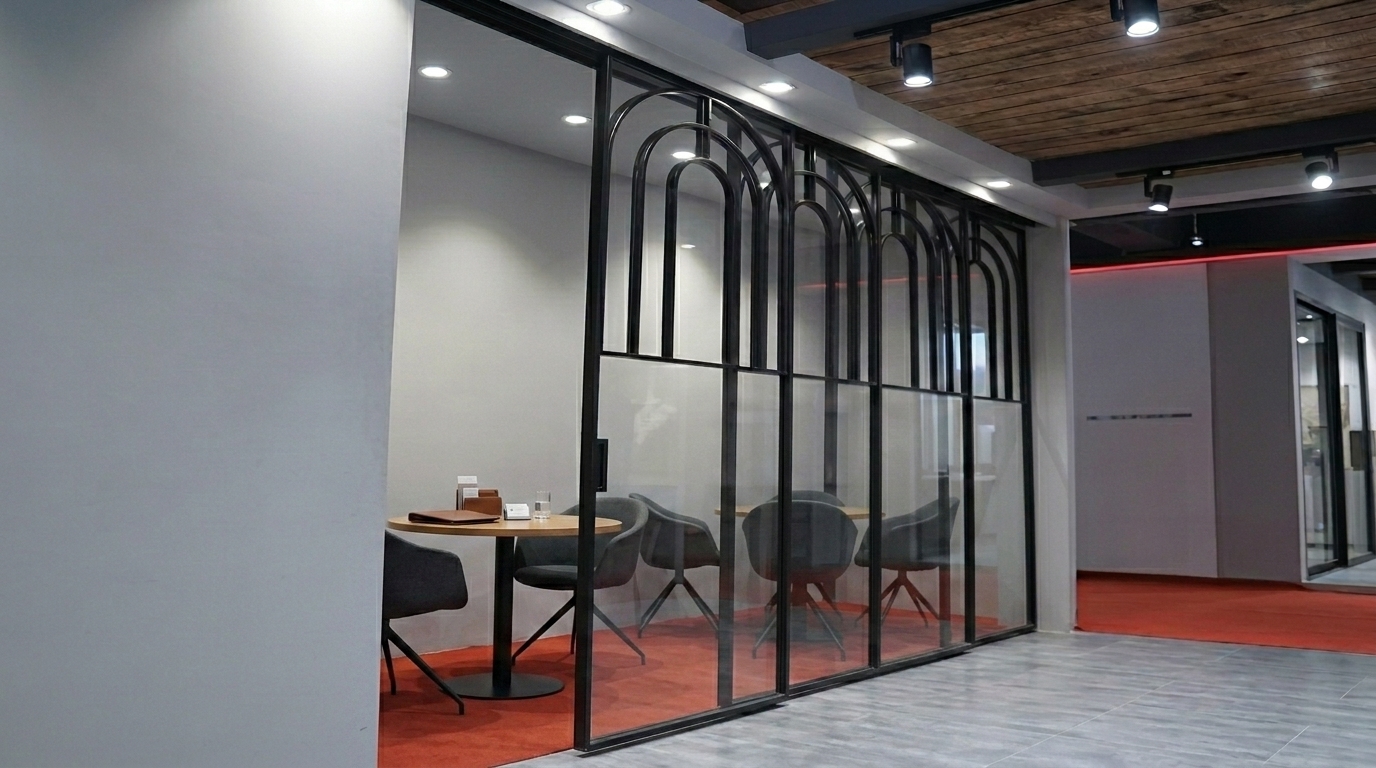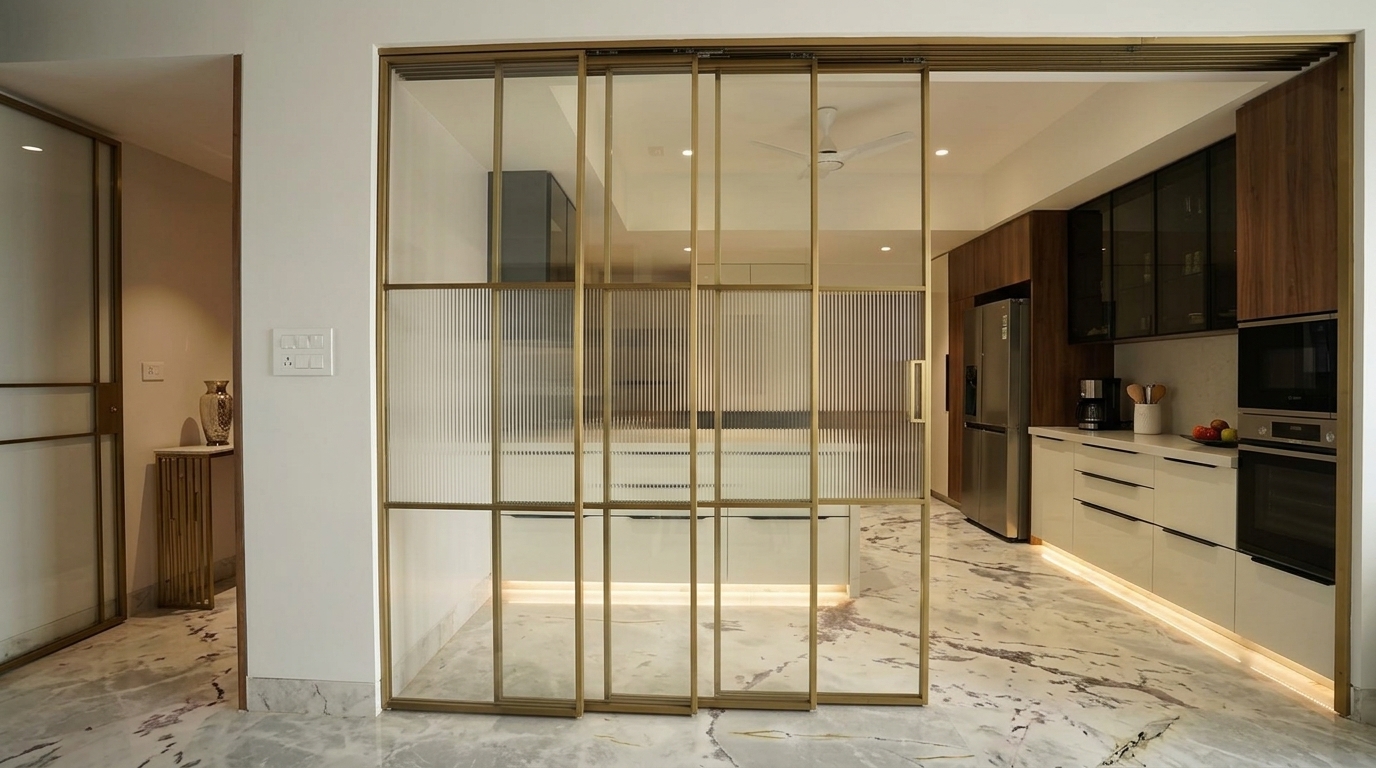
Wide sliding shutter opening to a Mumbai balcony
Service Profile · 1 Fix + 3 Synchronous Sliding Shutter

One panel stays. Three panels go.

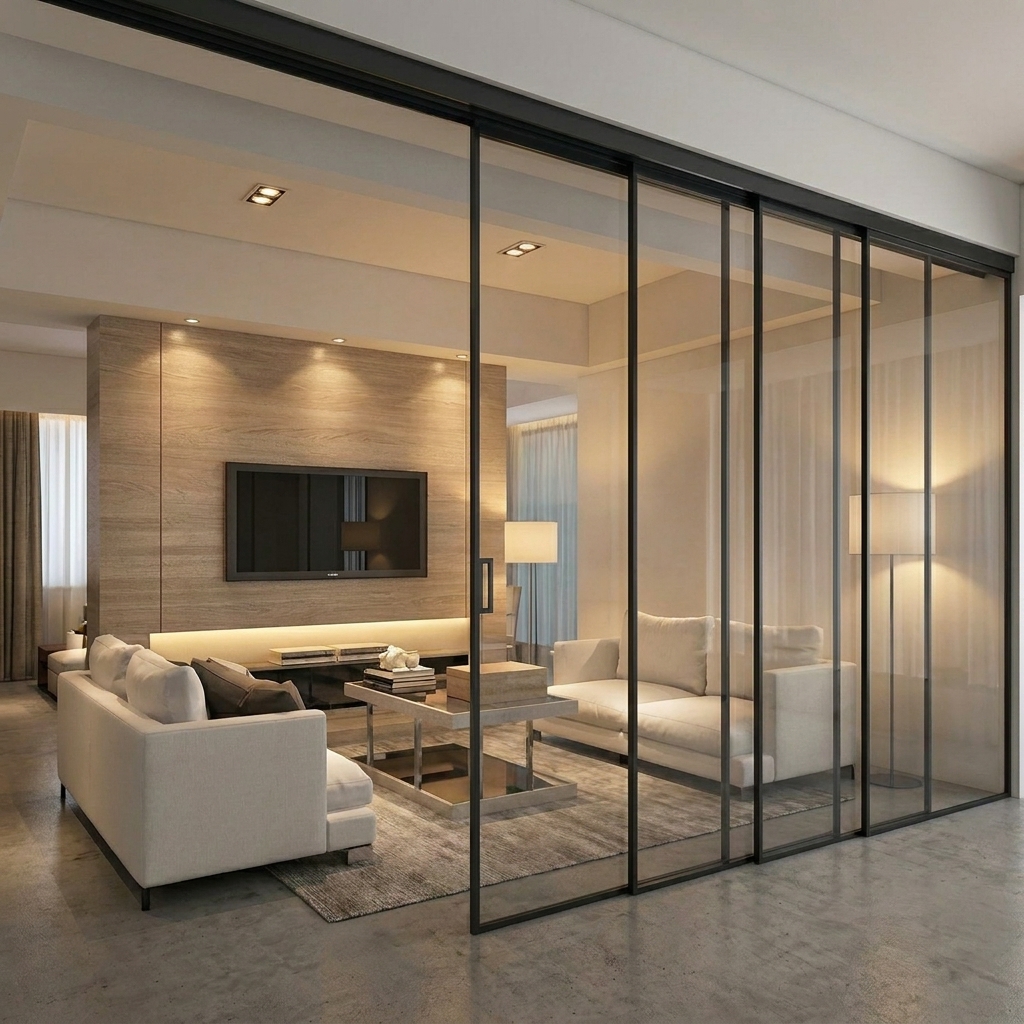
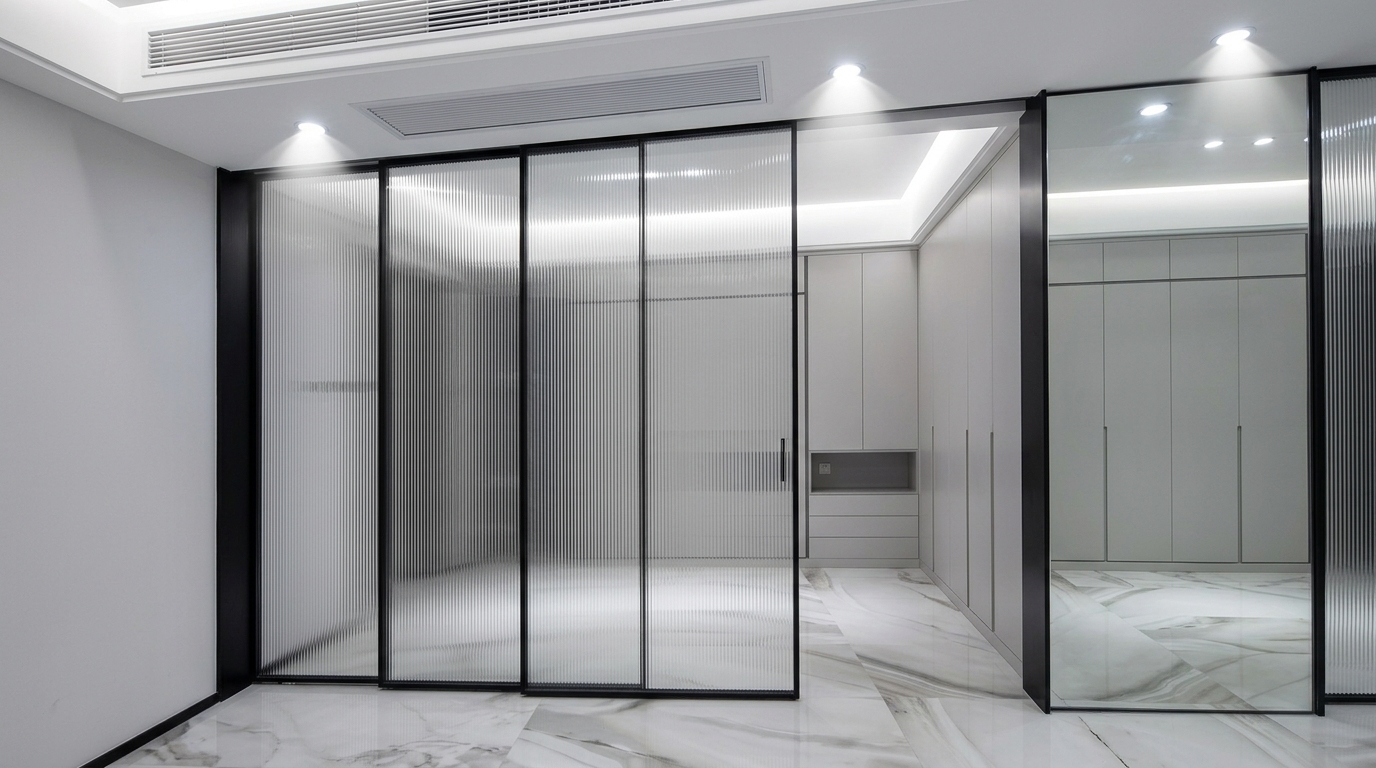
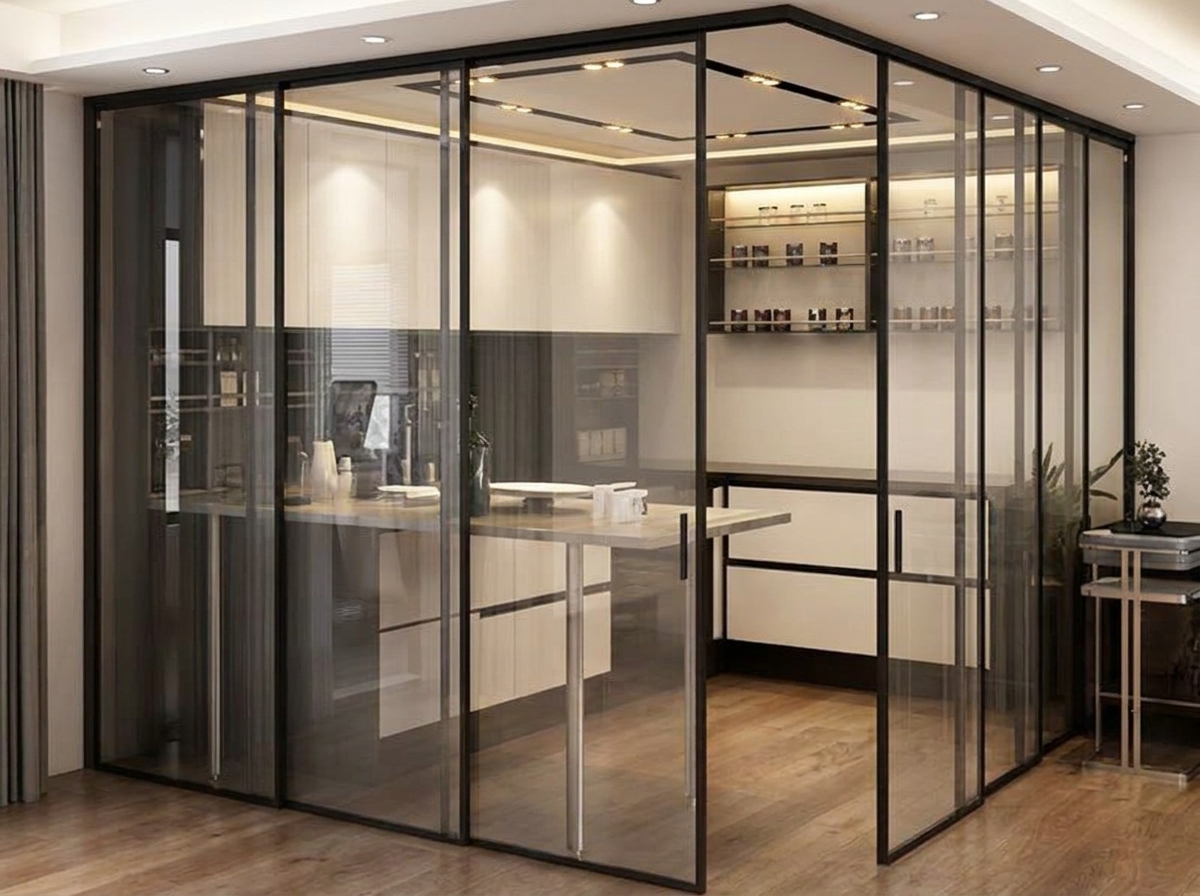
A four-panel 16 × 45 slim shutter. One panel is laminated to the frame as a sightline; the other three slide together synchronously to one side and stack neatly behind the fix. Single pull, full-clear opening — for wide balconies and terraces where the room should fully meet the outdoors.

Section
16 × 45 mm
Panels
1 fix + 3 sync
Run
Up to 6 m
Rollers
SS 304
Tracks
4
Frame life
15+ years
Scroll
Chapter 01 · The Problem

Wide openings need
more than a standard slider.

A four-metre balcony slider is the kind of opening that defines the living room. The (2+2) centre-meeting works on most flats — but on wider runs, the centre line sits squarely in the most important part of the view. Designers come to us when the brief is the room should fully open, not just be a bigger door.

The opening clears to one side — the elevation reads as a single sliding gesture, not as four separate panels.
i.

A (2+2) on a 5 m run

Symmetrical, but the centre meeting line falls in the middle of the view from the sofa. Half the panels still sit in the opening when the door is fully back.

ii.

A standard 4-panel slider

Every panel needs a separate pull. The owner finds two open and two stuck for a week. The drawing the designer signed off is not the drawing the family lives with.

iii.

A bi-fold on a 5 m balcony

Folds beautifully — but the stack jams against the parapet, the threshold detail loses water tightness, and the sliding-folding spec is heavier than the brief actually needs.

iv.

The fourth answer

One fixed panel as a sightline, three panels coupled and pulled together as one, stacked behind the fix when open. The view runs uninterrupted from the seating to the balcony rail.

Chapter 02 · How it works

Four panels.
One cable. One pull.

01

A 4-track 16 × 45 head

Top and bottom tracks machined for four parallel panels. The fix sits on track one — laminated to the frame as the sightline — and never moves. Tracks two, three and four carry the synchronous panels.

02

A synchronous coupling cable

The three sliding panels are coupled with a hidden cable in the head track. Pull the leading panel and panels two and three move with it at the same speed. The first panel travels the full distance; the others stack proportionally behind.

03

A magnetic catch at full close

When the leading panel reaches the fix at full close, a neodymium catch holds it flush. EPDM gasket on every meeting edge keeps the run weather-tight in monsoon — the same detail as our (2+2) slider.

No second pull.
No stuck panel.
No centre line in the view.

The room opens to one side and stays open. Suraj reads the elevation before the shop drawing leaves the workshop — the fix is placed on the side that least disturbs the sightline.

Sliding shutter detail with stacked panels
Stack behind fix · Synchronous cable
Chapter 03 · Material

What it’s made of.
Down to the cable.

Same 16 × 45 family as our centre-meeting slider — a slim section that has to carry four panels of glass on a four-track head. Every coupling part sized against the worst panel weight in the run, not the average.

Slim aluminium frame profile detail
Material 01

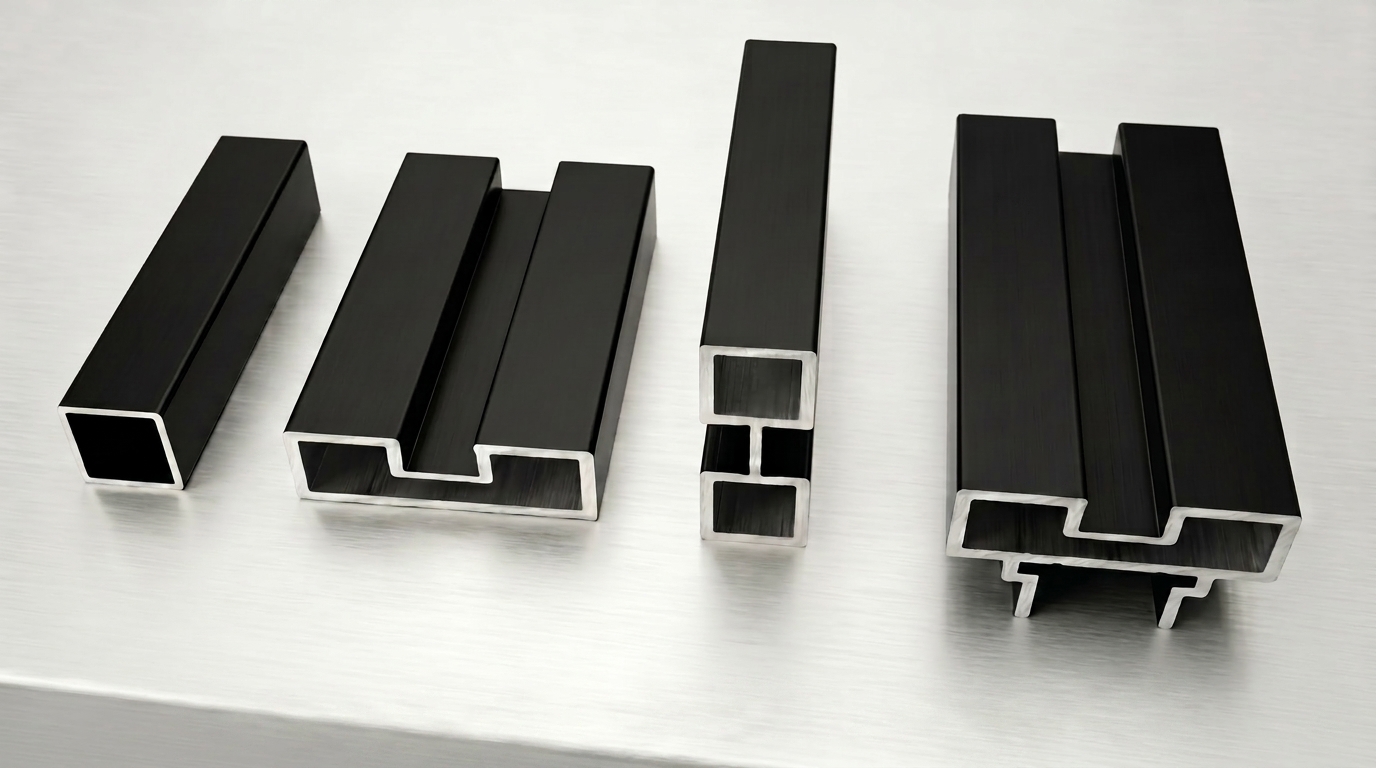
The section — 6063-T6 at 16 × 45 mm.

Architectural aluminium drawn to a slim 16 × 45 mm profile. Anodised silver, champagne, black, bronze — or powder-coat to any RAL or NCS swatch to match the existing window system in the flat.

Toughened glass panel close-up
Material 02

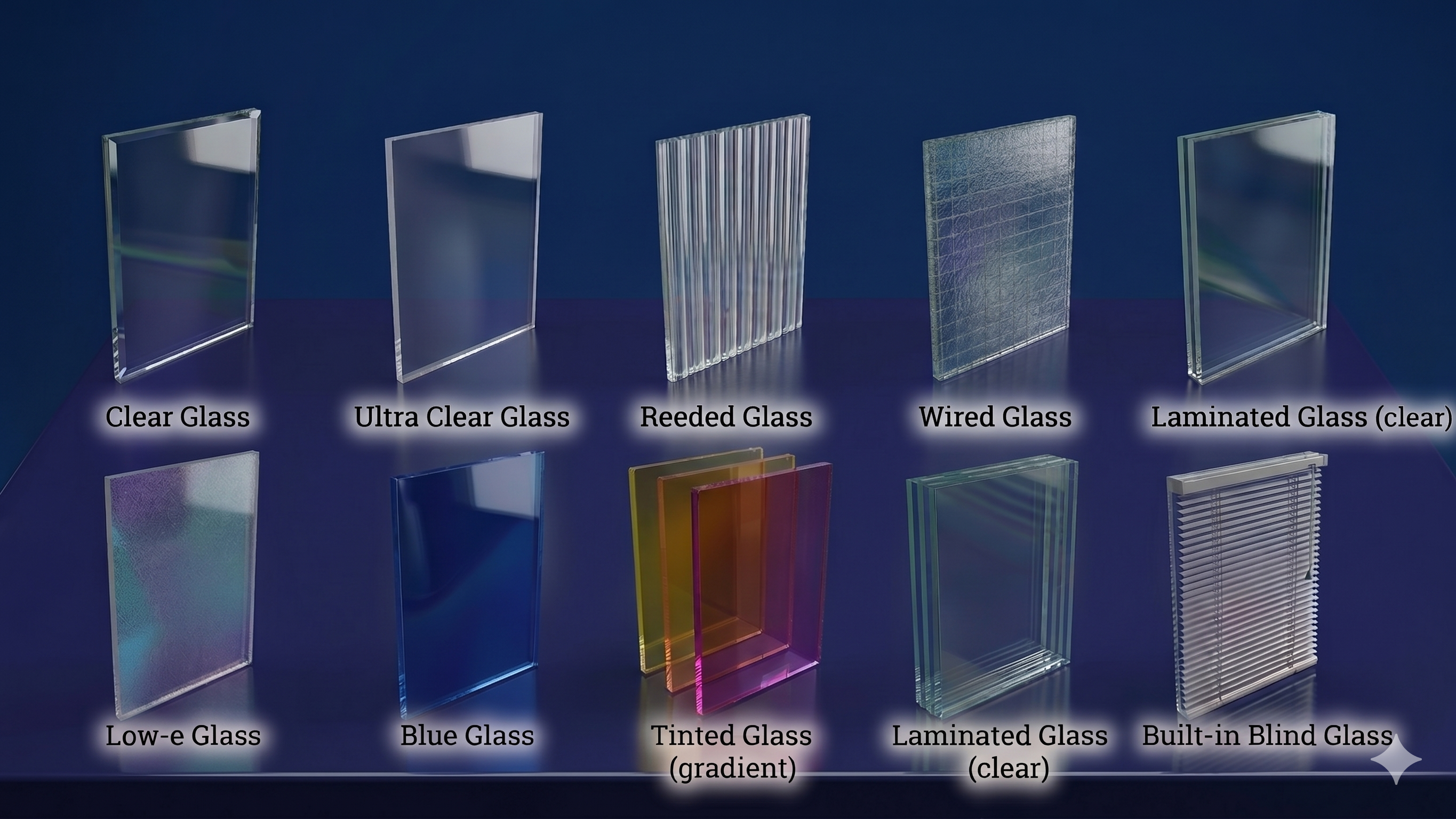
The glass — toughened 8 mm.

8 mm toughened across all four panels keeps roller load consistent — the synchronous cable is sized against panel weight, so a uniform glass spec is the cleanest engineering. 12 mm or DGU available where the brief calls for it.

Stainless steel hardware tag close-up
Material 03

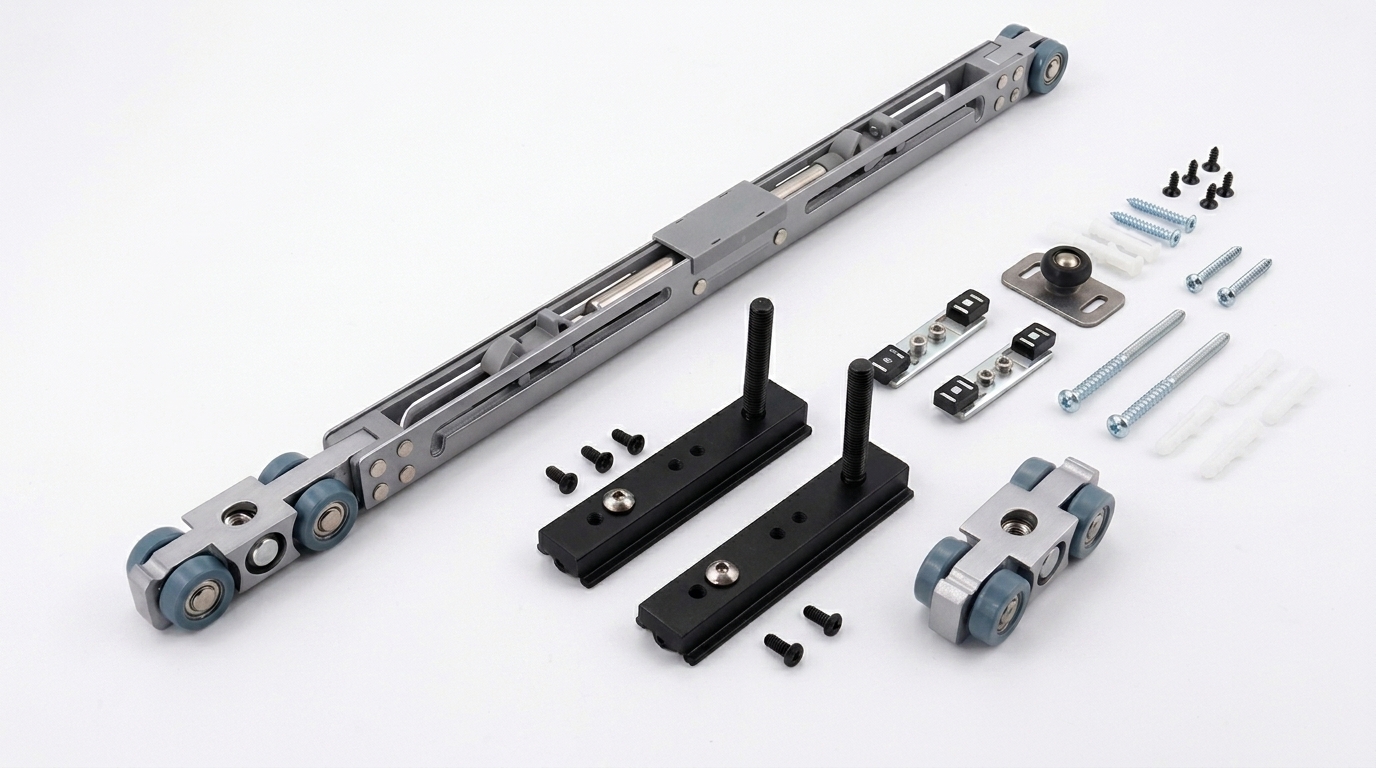
The hardware — all stainless.

SS 304 ball-bearing rollers on every moving panel. Synchronous cable is reinforced and serviceable from the head track. Magnetic catch at the meeting stile is neodymium. Every fastener stainless.

Chapter 04 · Where it’s installed

Wide openings.
Real elevations. Real light.

Wide balcony and terrace doors in Worli and Bandra. Pool-deck openings on Powai villas. Restaurant terraces. Podium-level outdoor lounges where the room should fully meet the outdoors. Anywhere a 4–6 m run wants to clear to one side rather than meet at the centre.

Living room with wide sliding glass doors
Wide balcony · Worli

The most common install.

A 5 m sea-facing balcony slider — fix on the parapet end, three panels stacking behind it. The view from the sofa reads uninterrupted from the inside corner of the room to the railing.

Terrace doors opening to outdoor space
Terrace · Bandra

4 m run, fix at the side

Open-plan room with garden-side glass doors
Pool deck · Powai villa

Garden-side opening

Restaurant terrace with glass door system
Restaurant terrace · Lower Parel

6 m run, single-pull

Podium lounge with view of the city
Podium lounge · Khar

Outdoor entertaining

Family room with sliding glass doors
Family room · Juhu

5 m opening to garden

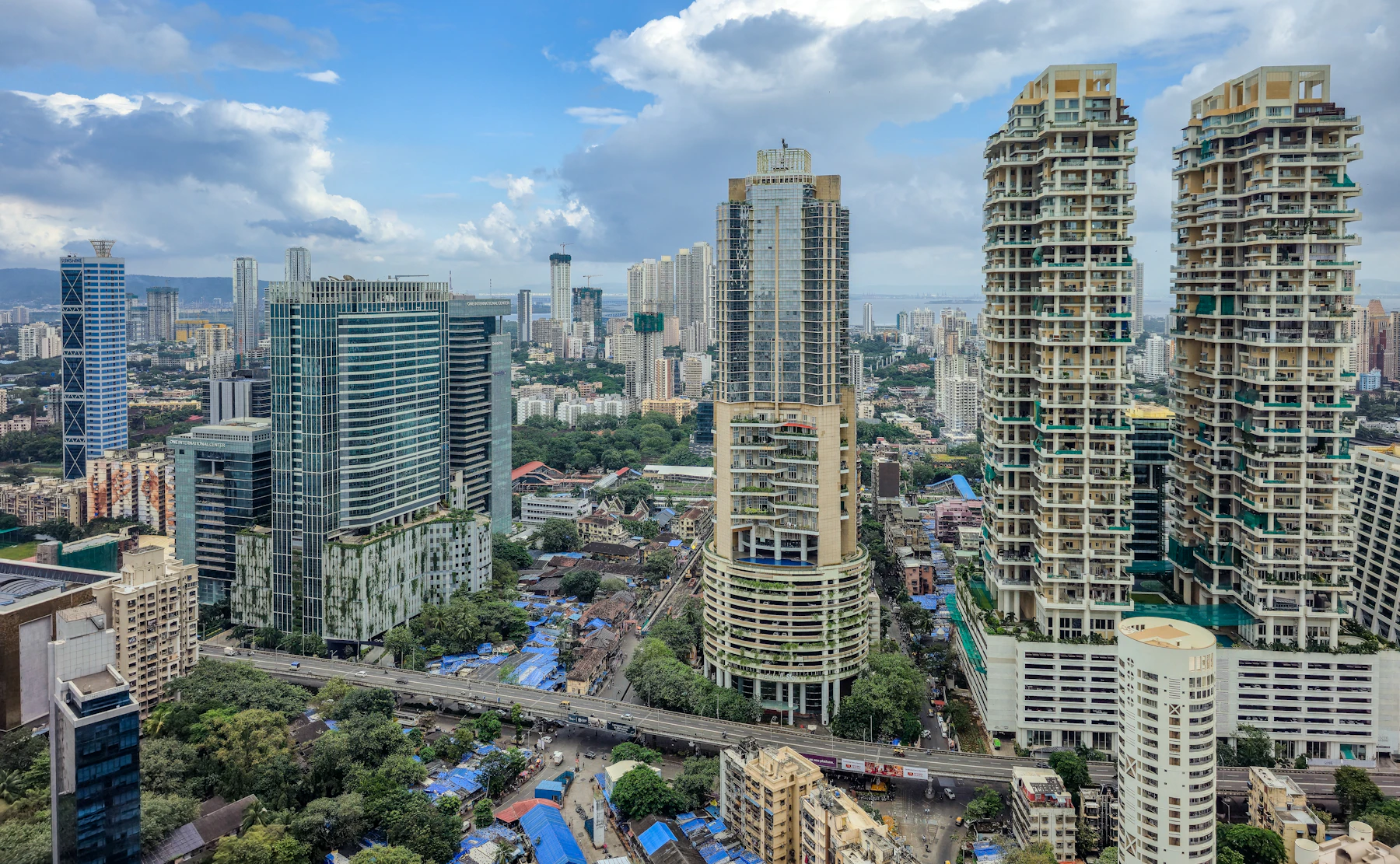
Mumbai sea-facing skyline at dusk
South Mumbai · Sea-facing

Marine-grade gasket and SS 316 fittings within 1 km of the coastline

Chapter 05 · Comparison

A direct read on the
seven decisions that matter.

Standard 4-panel slider
(2+2) centre-meeting on a wide run
Aditi 1 Fix + 3 Sync Shutter
Operation
Four separate pulls
Single pull at centre
Single pull moves all 3 sync panels
View when fully open
Two panels remain in opening
Two panels remain at the sides
Three-quarters of run fully clear
Centre meeting line
Multiple meeting joints
Centre line in middle of view
No centre line — only the side fix
Visual section
27 × 65 typical
16 × 45 slim
16 × 45 slim — same as our (2+2)
Roller life in monsoon
Plastic rollers fail in 3–5 yr
SS 304 ball-bearing
SS 304 ball-bearing — sealed
Mosquito-net rebate
Surface-fixed afterthought
Centre-cassette only
Side-cassette integrated from drawing stage
Designer sightline
Heavy line on elevation
Centre line dominates
Single fix reads as architectural detail
Chapter 06 · Benefits

Rarely a single feature.
Always the combination.

A full-clear opening to one side.

Three of the four panels stack behind the fix when open. Three-quarters of the run is fully clear — the room actually meets the balcony rather than just opening a window onto it.

A slim 16 × 45 sightline.

Same section as our centre-meeting slider. The fix reads as a single architectural line on the elevation, not as a heavy frame next to a heavier sliding panel.

Single-pull, synchronous operation.

Pull the leading panel and the other two move with it at the same speed. No fighting four separate pulls every morning. No panels left half-open behind a child.

Built for 15+ years in Mumbai weather.

SS 304 ball-bearing rollers are sealed against humidity. Synchronous cable is reinforced and serviceable from the head track. EPDM gasket on every meeting edge keeps water out.

Designer-spec finishes.

Anodised silver, champagne, black or bronze. Powder coat to any RAL or NCS swatch. The fix can be specified in different glazing — frosted, fluted or printed — to read as a panel of architectural glass.

Suits runs from 4 to 6 m wide.

Below 4 m the (2+2) is the cleaner answer. Above 6 m we step into the sliding-folding system. Between those — where most wide Mumbai balcony sliders live — this is the spec.

Integrated mosquito-net rebate.

A 25 mm side cassette space drawn into the frame from day one for our retractable net. Pull it across the full opening; roll it back into the side jamb when the season is over.

Reverses for left or right stack.

Mirrored shop drawing if the brief asks for the fix on the opposite end. We confirm the stack direction with the designer at drawing approval — not at install.

Designer-direct.

Suraj reads the drawing. He measures the opening himself, signs off the shop drawing before fabrication, and walks the site at handover. No franchise, no rep.

Chapter 07 · Common questions

The questions a designer
asks before the quote.

Up to 6 m total run with each panel at roughly 1.5 m. Beyond that we either step to a 1 fix + 4 sync (custom-coupled cable) or recommend the sliding-folding system. Below 4 m the (2+2) centre-meeting is usually the cleaner spec.
Two reasons. First, the fix gives the elevation a single sightline that ties the door to the architecture — the panels behind it become the operable element, not the design. Second, a coupled-cable run with one anchored end is mechanically far more reliable than four independent panels with four separate rollers.
Yes — and we encourage it. Frosted, fluted, sandblasted or printed glass on the fix reads as architectural detail. The sliding panels stay clear so the view is uninterrupted when the door is shut.
No. The cable is sized against panel weight, not run length — a 6 m run with the same 8 mm glass loads the cable identically to a 4 m run. We over-specify on every install; the cable is rated for 100,000+ cycles.
Yes. EPDM gasket on every meeting edge — including the joint between the fix and the leading sliding panel. Drained head and sill track with weep holes that route water to the outside. The bottom track is set behind a flush threshold so water cannot pool against the gasket.
Yes — the frame leaves a 25 mm side cassette space on the opposite end of the fix for our retractable net. The mesh pulls across the full run when the panels are open, magnetic-catches at the fix, and rolls back into the side cassette in three seconds.
5–7 weeks for a 4–6 m install, drawing approval to handover. Add a week for sea-facing flats — SS 316 hardware orders are longer. Site visits are within 48 hours of enquiry on flats inside Mumbai.
Send the drawing

Send the drawing.
We’ll quote by Friday.

No site-visit fee. No call-centre. No quote written before measurement. Suraj reads the drawing himself, walks the site within 48 hours of enquiry, and signs off the shop drawing before fabrication.

If the run is over 6 m or the brief is the wall disappears when open, ask about the sliding-folding system instead — different mechanism, same workshop, same designer-direct relationship.

Workshop
Santacruz (East), Mumbai
aditi enterprise · Aluminium fabricators for Mumbai's interior designers, architects and HNI residences.
© 2026 · All rights reserved