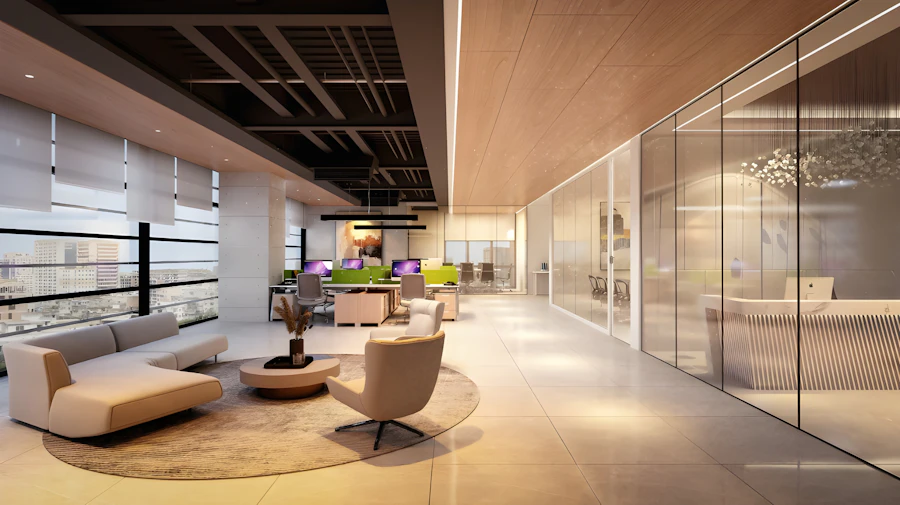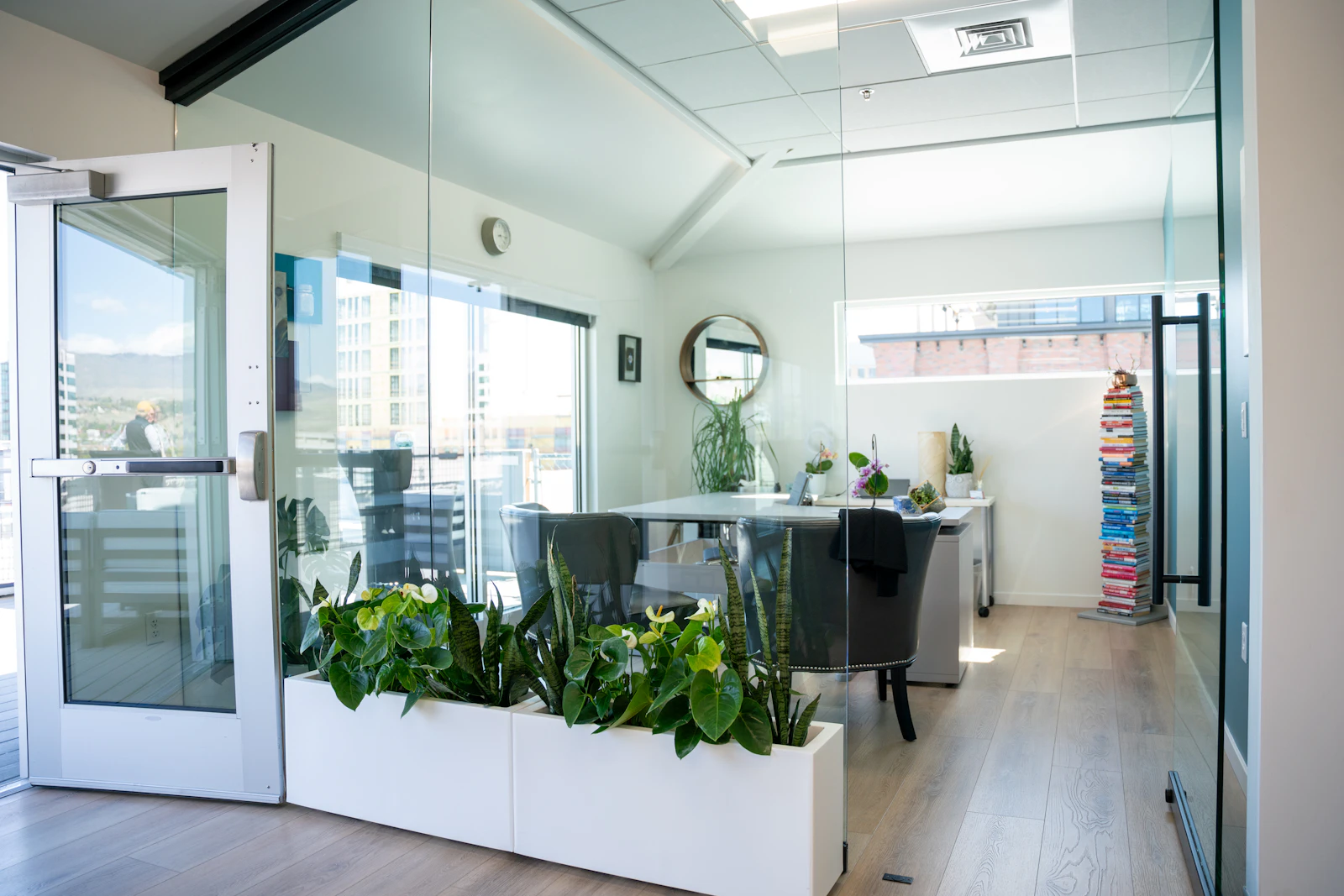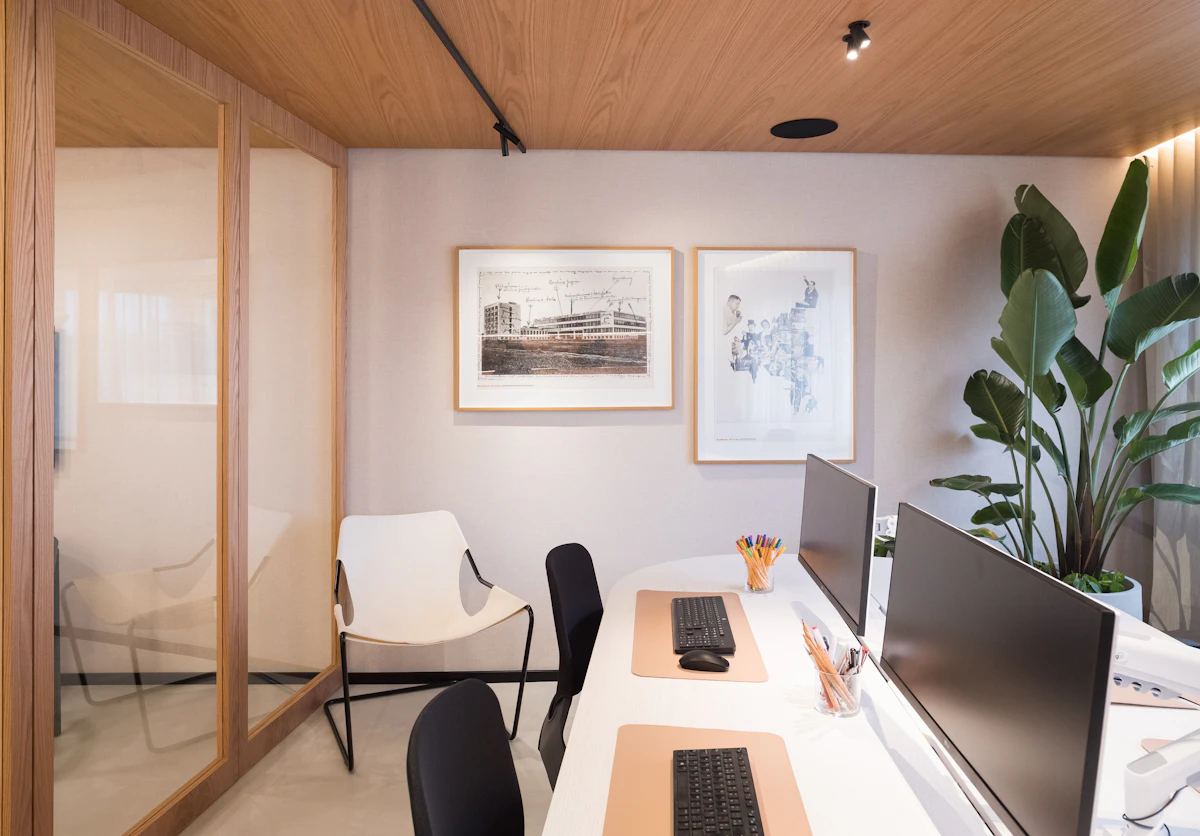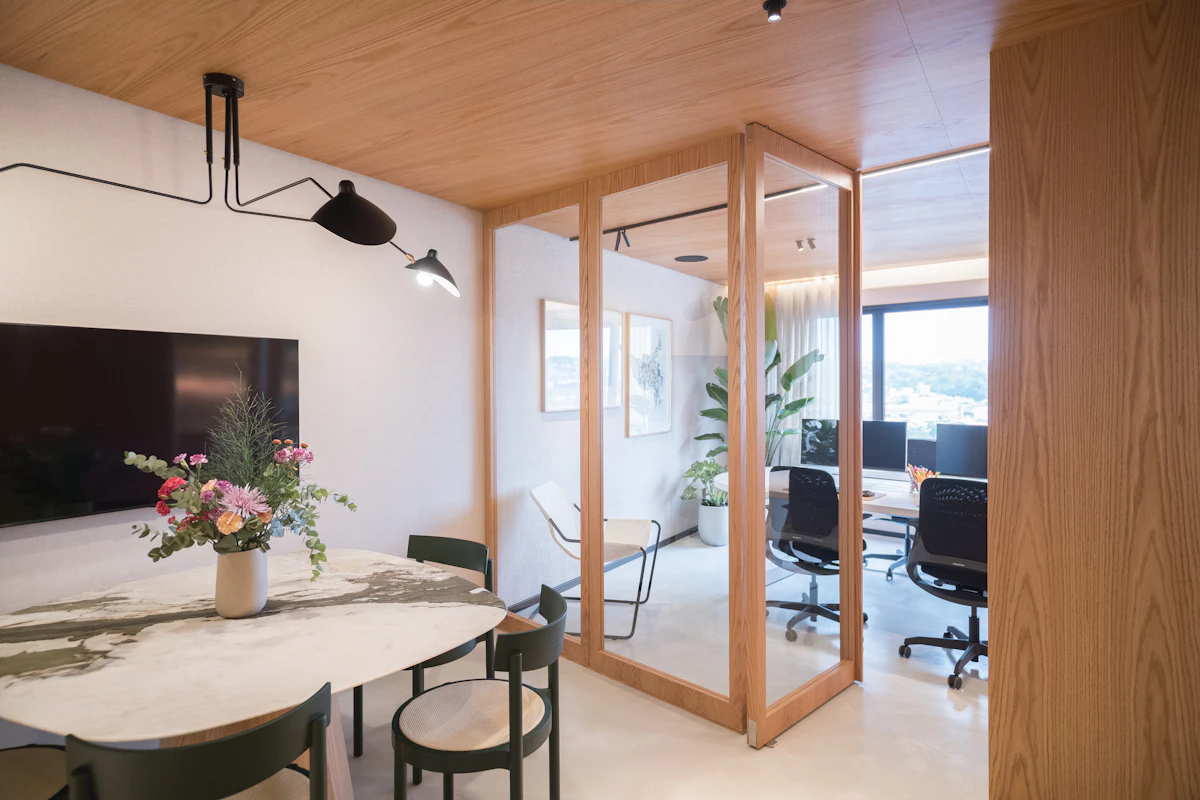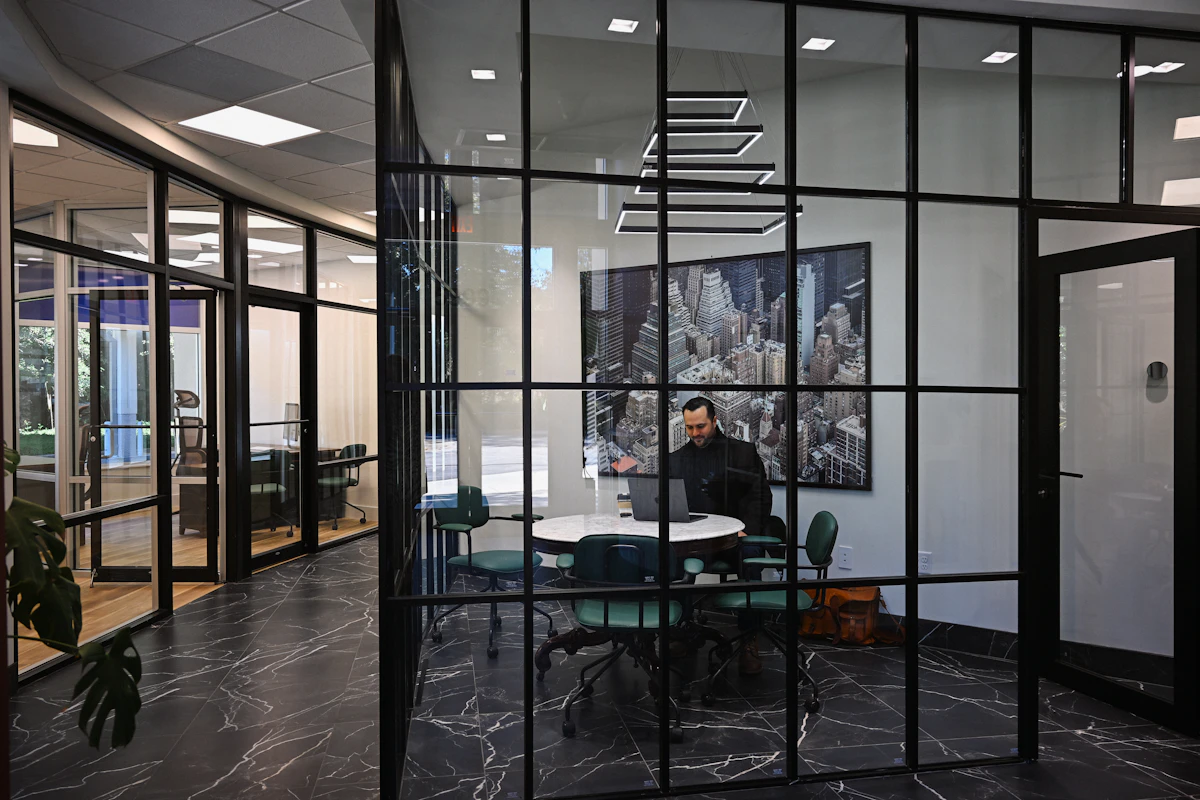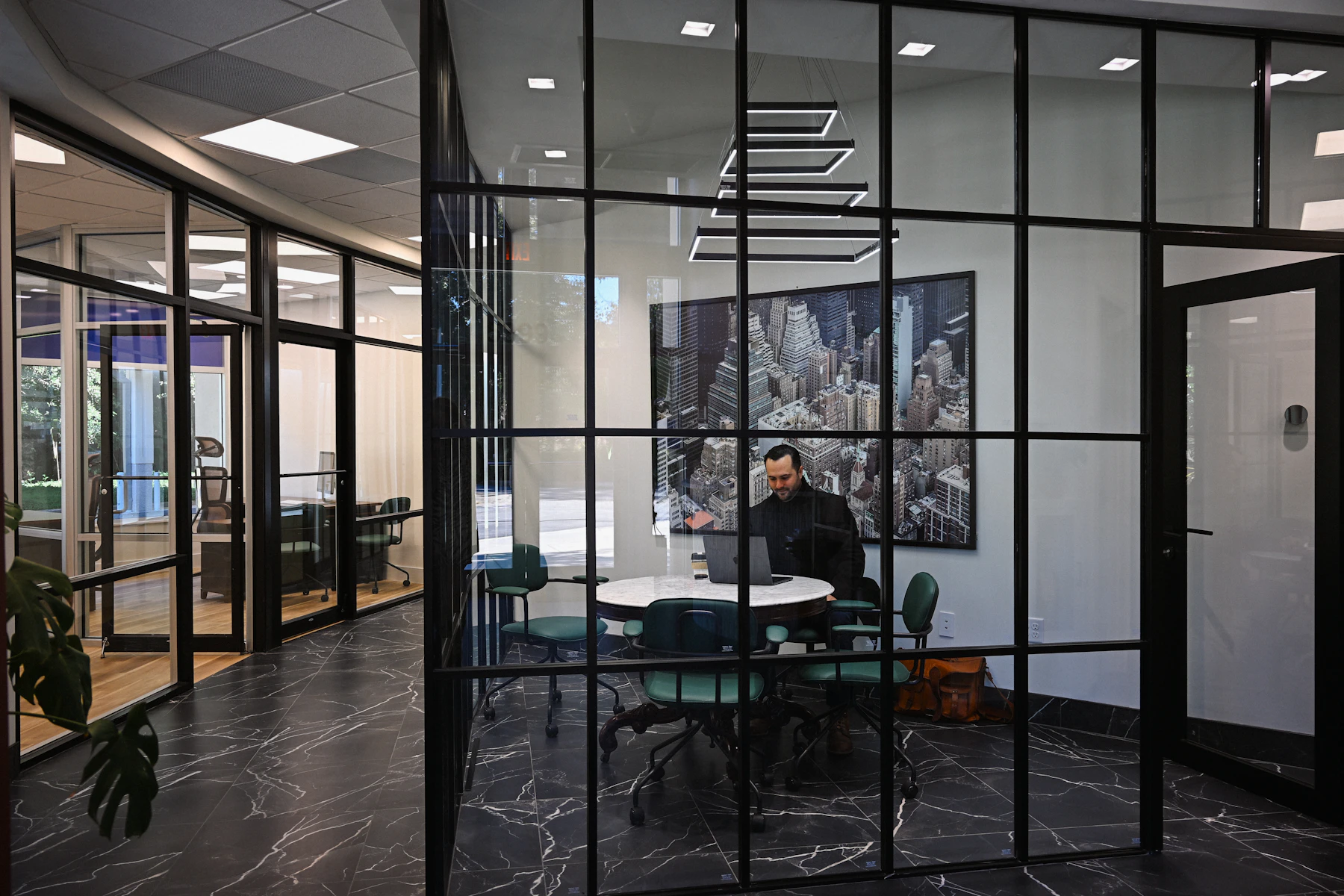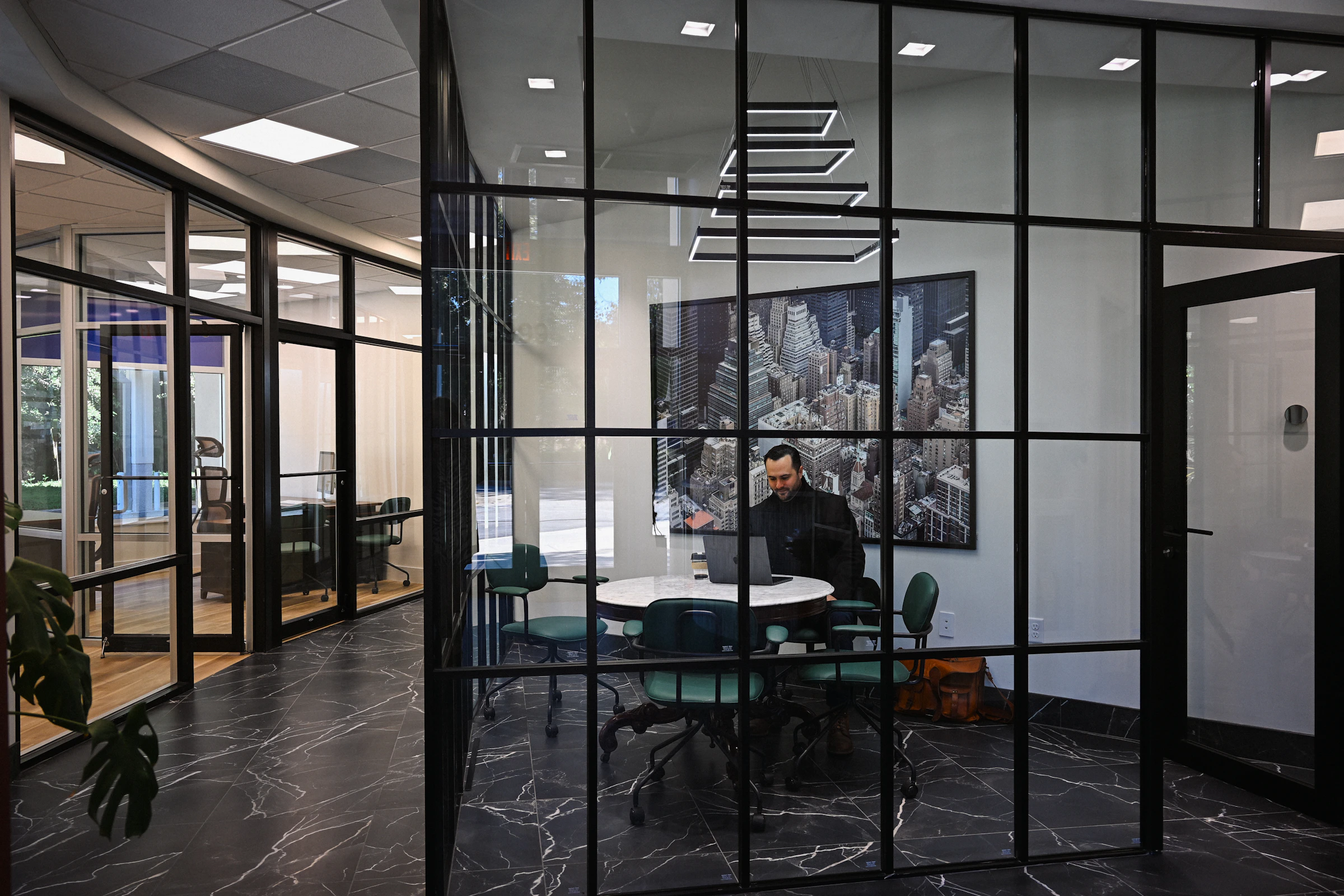
Frameless glass office cabin in a boutique Mumbai studio
Service Profile · Office Glass Cubicle

A cabin that keeps the daylight.

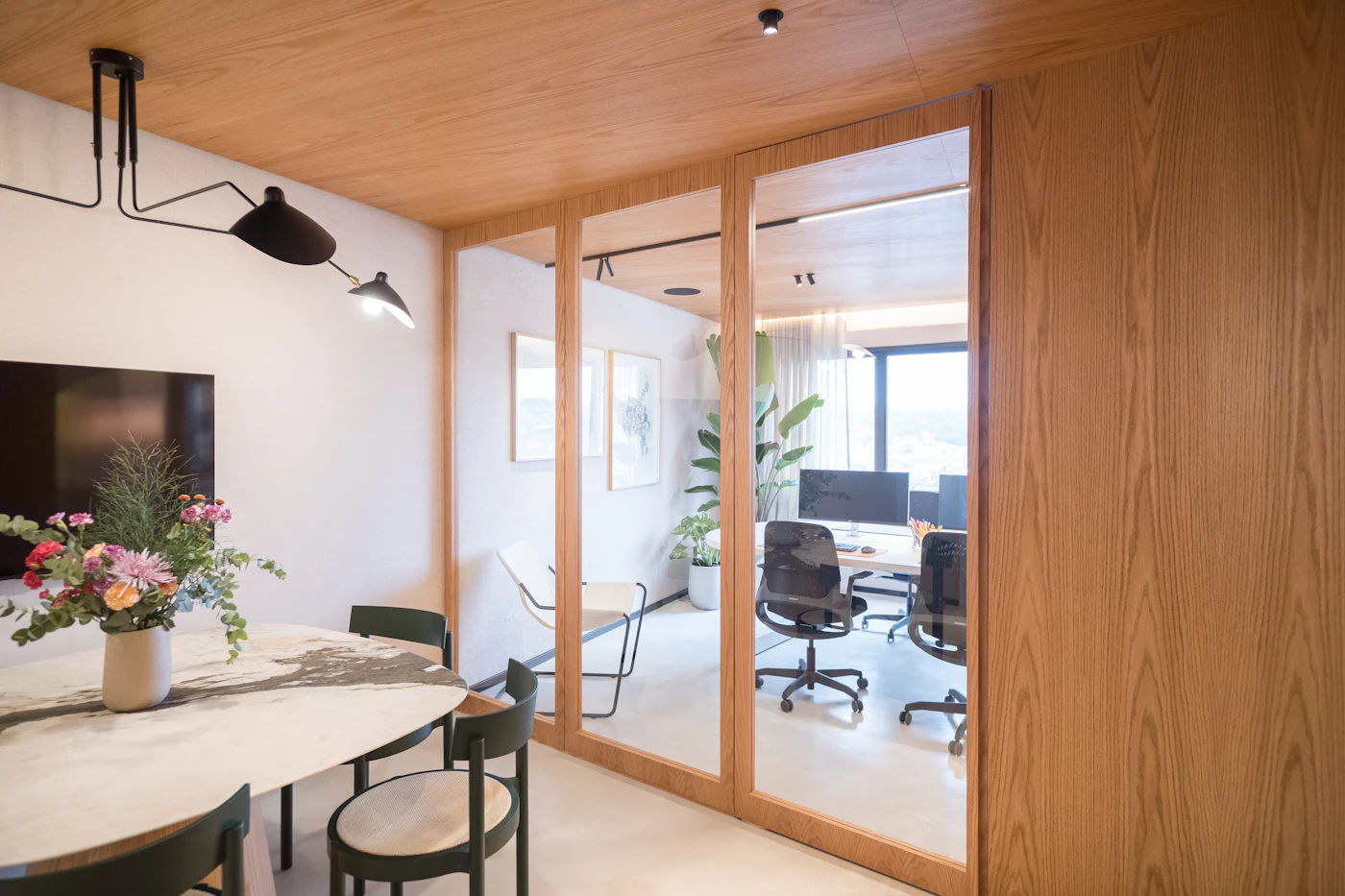
A glass-walled chamber with a swing door — frameless 12 mm tempered or a slim 16 × 45 aluminium frame. Detailed for compact Mumbai office floorplates where daylight is currency and the open-plan still needs a quiet room.

Glass
12 mm tempered
Height
Up to 3 m
Door
Single or double swing
Frame
Frameless or 16×45
Hardware
SS 304
Acoustic
DGU option
Scroll
Chapter 01 · The Problem

Three answers that
all cost the daylight.

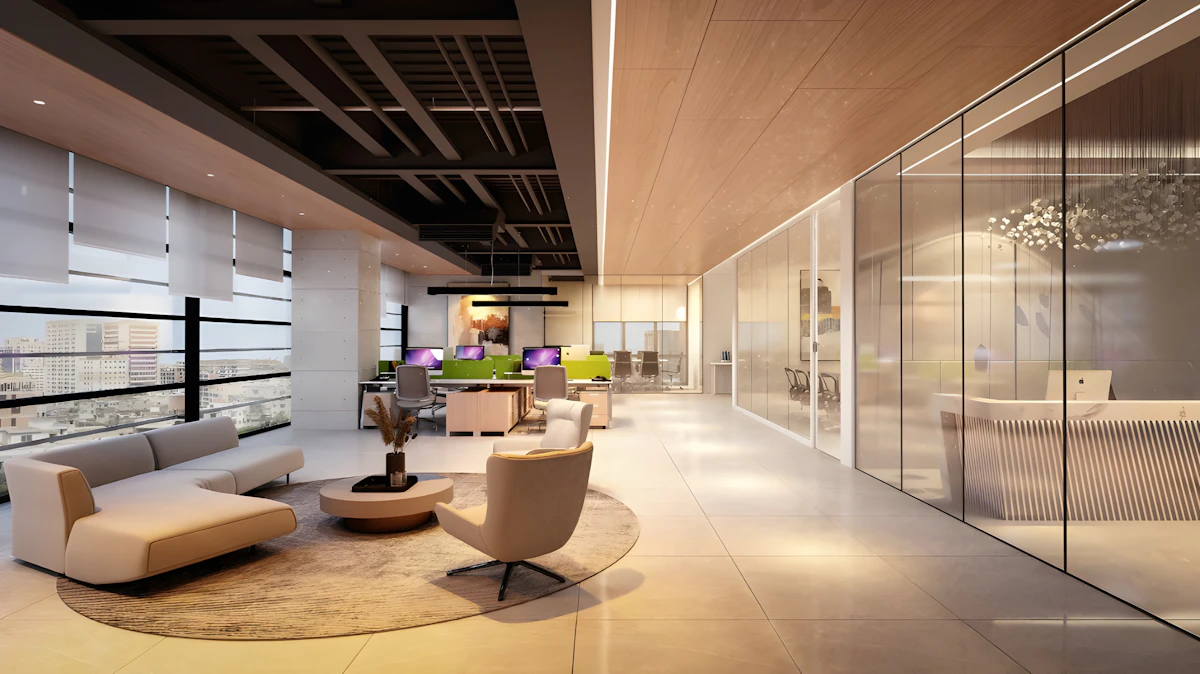
A boutique Mumbai office floorplate is rarely more than 1,800 sq ft. The brief asks for a private cabin, a meeting room, and an open studio — and the traditional answers all eat the same thing: the daylight from the only two windows on the floor.

In a Lower Parel design studio, the cabin is the one piece of architecture every visitor reads first.
i.

The plywood cabin

Dark, cheap-feeling, dated the day it’s installed. Blocks every line of sight; the studio behind it stops feeling like a studio.

ii.

A full-height brick wall

Permanent, daylight-killing, and a serious cost to undo when the floorplate is reorganised in three years.

iii.

No cabin, just a curtain

A meeting in the open. No acoustic separation, no privacy for a difficult call, no real chamber for the principal.

iv.

The fourth answer

A 12 mm tempered-glass cabin on SS 304 patch fittings — frameless or in a slim 16 × 45 frame — with a swing door and an optional acoustic DGU panel. Daylight passes through. Sound, mostly, doesn’t.

Chapter 02 · How it works

Four parts.
One daylit room.

01

A 12 mm tempered glass shell

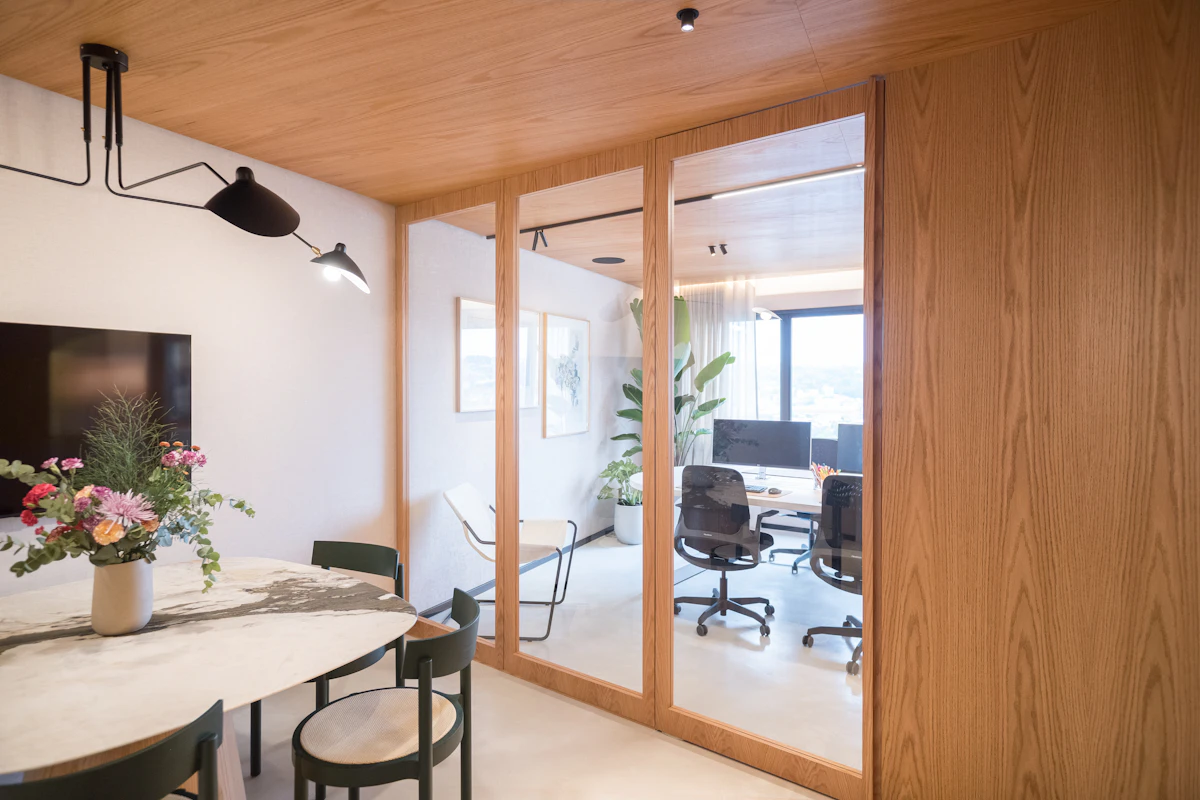
Floor-to-ceiling tempered panels, polished edges, jointed in clear silicone or with a slim aluminium mullion where the run exceeds the standard glass width.

02

SS 304 patch fittings, ceiling track

DORMA or D Line patch fittings at top and bottom of every panel. Where the cabin runs full-glass, an aluminium ceiling-track conceals the structure.

03

Swing door with magnetic hold-open

Single or double swing door on stainless pivots, soft-close hinge, magnetic hold-open at the door pivot so the door doesn’t blow shut in the AC draft.

No plywood.
No daylight loss.
No call-out for a re-paint when the floor is reorganised.

The whole cabin unbolts in a day. When the studio reorganises in three years, the glass moves to the new layout — the floor doesn’t become a demolition site.

Glass partition with stainless patch fitting detail
Patch fitting · SS 304 with magnetic hold-open
Chapter 03 · Material

What it’s made of.
Down to the gasket.

Same family of glass and stainless hardware as the rest of the workshop. Cabin glass is tempered to BIS 14900, patch fittings are DORMA-class, and the optional acoustic panel is a 24 mm DGU tested for 32 dB+ reduction.

Tempered glass partition in an office
Material 01

The glass — 12 mm tempered.

Saint-Gobain or AIS, polished edges, BIS 14900 tempered. Single panels up to roughly 1.8 × 3.0 m. Beyond that, a slim aluminium mullion or a 24 mm DGU panel for acoustic rooms.

Stainless steel patch fitting close-up
Material 02

The hardware — stainless SS 304.

DORMA / D Line patch fittings. SS 304 pivot hinges with soft-close, magnetic hold-open at the door, neodymium catch at the leading edge. Every fastener is stainless — no MS plated to streak the wall in monsoon.

Double-glazed unit edge detail
Material 03

The acoustic option — 24 mm DGU.

A double-glazed unit with an acoustic interlayer, tested at 32 dB+ reduction — enough for a podcast or recording-room cabin behind an open studio. EPDM gasket, argon-fill optional.

Chapter 04 · Where it’s installed

Real studios.
Real floorplates. Real daylight.

Boutique design studios in Lower Parel and Worli. Family-business chambers in BKC. Home-office cabins in HNI residences in Bandra and Juhu. The occasional podcast or recording-room build where the brief is open-plan but the work needs a quiet shell.

Boutique design studio with frameless glass cabin
Design studio · Lower Parel

The most common install.

A frameless 12 mm cabin for the principal’s chamber, set against a structural column, with a single swing door and a magnetic hold-open. Daylight passes from the window line through to the studio behind.

Promoter chamber with glass walls
Family business · BKC

Promoter’s chamber

Meeting room with slim aluminium framed glass
Meeting room · Worli

Slim 16×45 framed

Home office cabin with glass partition
Home office · Bandra

Cabin inside an HNI flat

Acoustic glass podcast room
Podcast room · Andheri

DGU acoustic shell

Reception with double swing glass door
Boutique floor · Khar

Double swing reception door

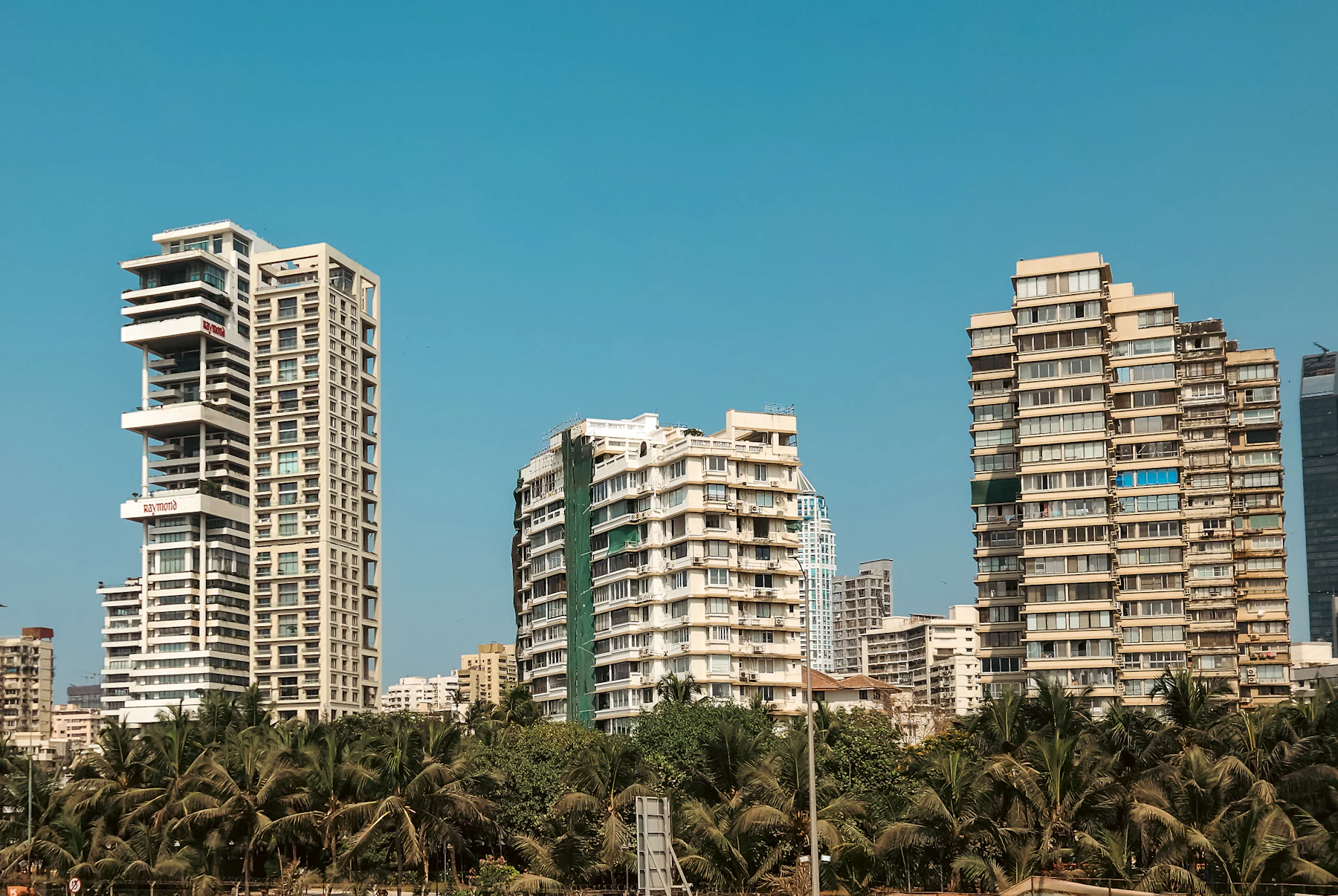
Mumbai sea-facing office tower at dusk
South Mumbai · Sea-facing

SS 316 patch fittings specified within 1 km of the coastline

Chapter 05 · Comparison

A direct read on the
seven decisions that matter.

Plywood cabin
Brick wall
Aditi Glass Cubicle
Daylight to the studio
Blocks completely
Blocks completely
Passes fully through
Acoustic separation
~22 dB single skin
~38 dB
32 dB+ with DGU option
Look on the floorplate
Dated within a year
Permanent, heavy
Editorial, light, designer-fluent
Hardware grade
MS hinges, plywood doors
SS 304 patch, soft-close pivot
If the layout changes
Demolish, re-skim, re-paint
Major demolition
Unbolt, move, re-install in days
Service life
5–7 yr before re-laminate
20+ yr
15+ yr without re-finishing
Door behaviour
Slams or sticks
No door (in walls)
Soft-close, magnetic hold-open
Chapter 06 · Benefits

Daylight passes through.
The brief, mostly, doesn’t.

Daylight passes through the cabin.

In a 1,800 sq ft floorplate with two windows, every wall that blocks daylight costs the studio a real amount of usable space. The glass cabin keeps the floor reading as one room.

Acoustic separation, without the brick.

Single 12 mm tempered gives ~22 dB of separation — enough for an open studio cabin. A 24 mm DGU panel takes that to 32 dB+ — enough for a podcast or recording shell.

Frameless or slim-framed, by brief.

Frameless 12 mm where the moodboard reads minimal. Slim 16 × 45 aluminium frame where the brief reads more architectural. Same workshop, same hardware standard.

Swing door with magnetic hold-open.

A neodymium magnet at the pivot holds the door open when the AC draft would otherwise slam it. Soft-close on the swing-back so the door never bangs against the frame.

Branded vinyl frosting friendly.

Etched-effect vinyl, branded silhouettes, partial frosting at sit-line — the cabin is detailed to take a graphic application without compromising the structural patch fittings.

A floorplate that reorganises easily.

Patch fittings unbolt. Glass panels move. A studio that grows from 5 to 15 people in three years isn’t held back by a cabin that has to be demolished and re-built.

SS 304 hardware throughout.

Every patch fitting, hinge, screw and washer is stainless. No MS plated parts that rust through the powder coat in two monsoons in a sea-facing office.

Pairs with the rest of the spec.

Same workshop fabricates the matching reception desk frame, the meeting-room sliders, the kitchenette glass shutters and the boardroom DGU. One fabricator on the snag list.

Designer-direct.

Suraj reads the drawing. No franchise, no call-centre, no rep filtering technical questions. The relationship is the brand.

Chapter 07 · Common questions

The questions a designer
asks before the quote.

Single 12 mm tempered with a properly gasketed door gives roughly 22 dB of reduction — enough that an open studio doesn’t hear a normal-volume call. A 24 mm DGU panel with an acoustic interlayer takes that to 32 dB+, which is podcast-grade. Send the drawing and the use-case and we’ll specify the right glass.
Yes — a top-hung sliding panel on an aluminium ceiling track works for tighter floorplates. Acoustic performance drops a few dB versus a gasketed swing door, so we use it where the brief is privacy rather than sound separation.
Standard SS 304 is fine for most Mumbai offices. For a sea-facing building within 1 km of the coastline (Worli sea-face, Cuffe Parade, Bandstand), we specify SS 316 patch fittings — same grade as marine hardware. No rust path through to the glass.
Yes. Etched-effect vinyl, partial frosting at sit-line, branded silhouettes — applied after install, removable without damaging the glass. We can recommend a specialist applicator we work with regularly.
14–18 working days from drawing approval to handover for a typical principal’s chamber + one meeting room. Add a week if the spec includes a DGU acoustic panel — those are made-to-order.
Yes — the patch fittings unbolt. A two-person team can dismantle a typical chamber in a day and re-install it on a new floorplate in two more days, assuming the new ceiling height matches.
Pricing depends on glass area, hardware grade and whether the cabin includes a DGU acoustic panel. Send the drawing or the floorplate dimensions and we’ll quote within two working days.
Send the drawing

Send the drawing.
We’ll quote by Friday.

No site-visit fee. No call-centre. No quote written before measurement. Suraj reads the drawing himself, walks the floor within 48 hours of enquiry, and signs off the shop drawing before fabrication.

If the floorplate also calls for matching reception glass, kitchenette shutters or a DGU boardroom — same workshop, same finish standard. Specify the whole floor from one fabricator.

Workshop
Santacruz (East), Mumbai
aditi enterprise · Aluminium fabricators for Mumbai's interior designers, architects and HNI residences.
© 2026 · All rights reserved